
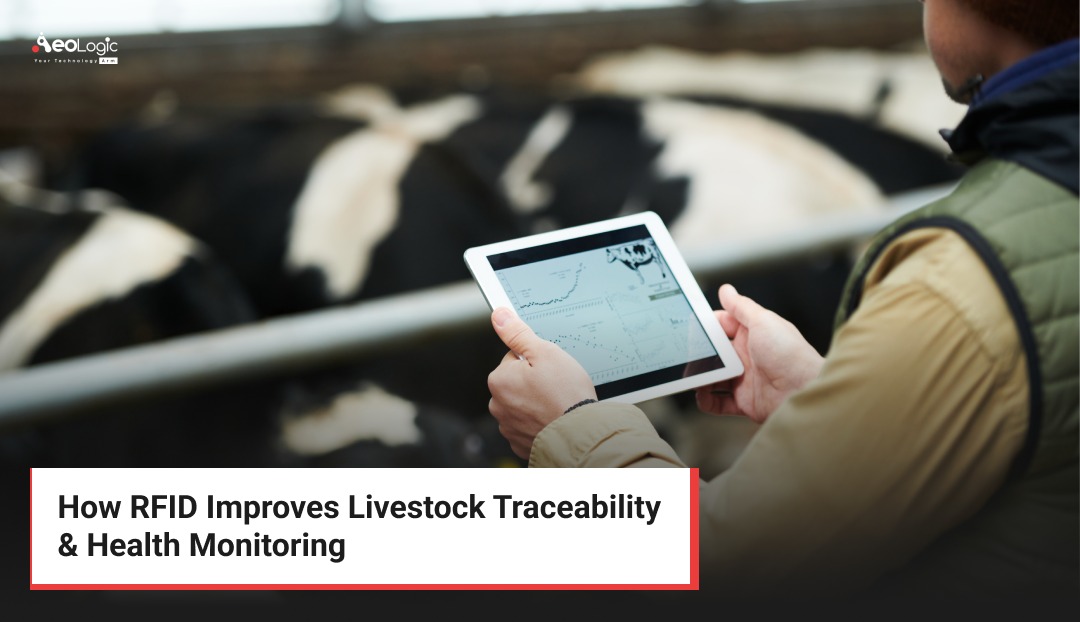

Livestock farming is evolving rapidly as global food demand increases, regulations tighten, and consumers demand transparency. Traditional livestock management methods—manual tagging, paper records, and visual monitoring—are no longer sufficient for large-scale, modern operations. Errors in identification, delayed disease detection, and limited traceability can result in financial losses, regulatory penalties, and compromised animal welfare. This is where RFID livestock traceability becomes a game-changing solution. By enabling real-time identification, movement tracking, and health monitoring, RFID technology allows farmers and agribusinesses to manage livestock with precision and confidence. Moreover, as farms adopt data-driven practices, RFID is emerging as a foundational technology for sustainable and compliant livestock management.
Hence, an integrated approach using RFID technology in livestock management and a robust RFID livestock identification system ensures animals are tracked accurately from birth through transportation, breeding, and processing. As a result, traceability and health monitoring are no longer reactive tasks but proactive, automated processes.
Understanding RFID Livestock Traceability and Health Monitoring
RFID, or Radio Frequency Identification, uses radio waves to identify and track tagged animals automatically. Each RFID tag carries a unique digital identity that can be read without direct contact or line of sight. In livestock farming, tags are commonly attached to ears, collars, or implanted safely under the skin.
Moreover, RFID livestock traceability refers to the ability to monitor an animal’s identity, movement, health status, and lifecycle events in real time. This traceability ensures accurate recordkeeping and transparency across the livestock supply chain. When paired with health data, RFID also supports early disease detection and preventive care.
Therefore, a modern RFID livestock identification system integrates tags, readers, antennas, and management software. This system captures animal data automatically and synchronizes it with farm management platforms. Consequently, RFID technology in livestock management reduces manual effort while increasing data accuracy and operational efficiency.
Why RFID livestock traceability Matters in Today’s World
The importance of RFID livestock traceability has grown significantly due to changing industry demands. Governments worldwide are enforcing stricter animal identification and disease control regulations. Farmers must demonstrate clear records of animal movement, health treatments, and origin.
Moreover, disease outbreaks such as foot-and-mouth disease or bovine tuberculosis can spread rapidly without proper monitoring. RFID enables early detection and quick isolation, protecting entire herds. Therefore, RFID technology in livestock management plays a vital role in biosecurity.
Lastly, consumer expectations also drive traceability adoption. Buyers increasingly demand proof of ethical farming, animal welfare, and food safety. An effective RFID livestock identification system provides verifiable data that builds trust and supports market access.
Key Advantages for Modern Livestock Operations
Accurate Animal Identification and Tracking
RFID ensures each animal is uniquely identified and tracked in real time. This eliminates manual errors and strengthens RFID livestock traceability across farms, transport, and processing stages.
Improved Health Monitoring With RFID livestock traceability
With RFID, health records such as vaccinations, treatments, and illness history are updated instantly. Early detection of health issues helps farmers respond quickly and prevent disease outbreaks.
Enhanced Operational Efficiency
RFID automates data collection, reducing paperwork and labor-intensive processes. Farm staff spend less time on recordkeeping and more time on animal care and productivity.
Regulatory Compliance and Audit Readiness
RFID systems maintain accurate and transparent records required by government regulations. This simplifies audits, improves compliance, and supports traceability requirements.
Better Breeding and Feeding Management
RFID data helps monitor growth rates, breeding cycles, and feed efficiency. Farmers can optimize feeding programs and improve overall herd performance.
Supply Chain Transparency
RFID provides end-to-end visibility of livestock movement. This transparency builds trust with buyers and ensures food safety across the supply chain.
Scalable and Future-Ready Operations
RFID systems grow with farm operations. Whether managing small herds or large-scale farms, RFID supports long-term expansion and sustainable livestock management.
How to improve RFID livestock traceability
Firstly, animals are tagged at birth or upon arrival at the farm. These RFID tags store unique identification numbers linked to digital records. As animals move, RFID readers capture location and status updates automatically.
Next, health data is logged through routine scans. Vaccinations, treatments, and health checks update the system instantly. This ensures RFID livestock traceability remains accurate and up to date.
Meanwhile, feeding and breeding programs benefit from RFID insights. Farmers analyze growth rates, breeding cycles, and feed efficiency using data from the RFID livestock identification system. Therefore, productivity improves without additional manual effort.
Additionally, transportation and supply chain tracking become seamless. RFID technology in livestock management ensures animals are monitored from farm to processing facilities, supporting compliance and recall readiness.
Challenges in RFID Adoption
Despite its benefits, RFID adoption presents challenges. Initial costs for tags, readers, and software can deter smaller farms.
Infrastructure Costs of RFID livestock traceability
One of the primary challenges in adopting RFID for livestock operations is the upfront investment. RFID tags, readers, software platforms, and network infrastructure require capital expenditure. For small and mid-sized farms, these costs may seem high initially, even though long-term savings and productivity gains often offset them.
Environmental and Signal Interference Issues
Livestock environments present harsh conditions such as mud, moisture, extreme temperatures, and metal equipment. In addition, these factors can affect RFID signal performance and tag durability. Selecting rugged, livestock-grade tags and optimizing reader placement is essential to maintain reliable RFID livestock traceability.
Data Management and System Integration
RFID generates large volumes of data that must be stored, processed, and analyzed effectively. Integrating RFID systems with existing farm management, veterinary, or regulatory platforms can be complex without proper technical planning.
Training and Change Management
Farm staff may be unfamiliar with digital technologies and automated systems. Without adequate training and ongoing support, RFID systems may be underutilized or incorrectly used, reducing their effectiveness in health monitoring and traceability.
Tag Loss and Maintenance Challenges
Animals may damage or lose RFID tags due to physical activity or environmental exposure. Regular inspections, proper tag placement, and backup identification methods are necessary to ensure consistent data accuracy.
Connectivity and Remote Location Constraints
Many livestock farms operate in remote areas with limited internet connectivity. Reliable data transmission can be challenging, requiring offline capabilities or alternative communication solutions to ensure continuous system functionality.
Transitioning Toward Smarter RFID livestock traceability
Moving from Manual to Data-Driven Farming
Traditional livestock management relies heavily on visual identification and manual recordkeeping, which limits accuracy and scalability. Transitioning to smarter systems allows farmers to replace guesswork with real-time data. RFID-enabled tracking provides precise insights into animal movement, health, and performance, forming the foundation of data-driven decision-making.
Integrating RFID with Digital Farm Platforms
Smarter livestock systems emerge when RFID is integrated with farm management software, analytics tools, and mobile applications. This integration creates a unified digital ecosystem where data flows seamlessly across operations. Farmers gain instant access to animal records, health histories, and productivity metrics from a single dashboard.
Enhancing Animal Health and Welfare
With continuous monitoring, farmers can identify early signs of illness, stress, or abnormal behavior. RFID-driven alerts support preventive care rather than reactive treatment. This proactive approach improves animal welfare, reduces mortality rates, and lowers veterinary costs over time.
Supporting Automation and Smart Equipment
RFID systems work alongside automated feeders, weighing stations, and sorting gates. These connected tools adjust feeding, segregation, or treatment processes automatically based on individual animal data. As a result, labor efficiency improves while operational consistency increases.
Building Scalable RFID livestock traceability
Smarter livestock systems are designed to scale. Whether expanding herd size or adding new facilities, RFID-based infrastructure adapts without disrupting existing workflows. This flexibility ensures long-term sustainability and supports growth in increasingly competitive agricultural markets.
Aligning with Regulatory and Market Expectations
Digital livestock systems help farmers meet evolving regulatory requirements and market standards. Accurate traceability records and transparent health data enhance compliance, strengthen buyer trust, and open access to premium markets demanding verified livestock information.
The Future of RFID Livestock Traceability and Health Monitoring
The future of agriculture depends on smarter data usage, and RFID livestock traceability will play a central role. Advanced analytics will turn RFID data into predictive insights, allowing farmers to anticipate health issues before symptoms appear.
Moreover, Artificial intelligence will further enhance RFID technology in livestock management. By analyzing movement patterns and health indicators, systems will recommend preventive actions, improving animal welfare and productivity.
Additionally, blockchain integration will also strengthen RFID livestock identification system capabilities. Immutable records will enhance transparency and trust across global supply chains, supporting export compliance and food safety. Additionally, machine learning models will continuously refine predictions by learning from historical livestock data and environmental conditions. Moreover, this will enable farmers to adjust feeding schedules, housing conditions, and veterinary care with greater precision. Real-time alerts generated from combined RFID and AI systems will reduce response times during health emergencies and minimize the spread of disease. Over time, these insights will support more sustainable farming practices by optimizing resource usage and reducing waste. As digital agriculture matures, data-driven decision-making powered by RFID livestock traceability will become essential for improving farm resilience, profitability, and long-term food security across diverse farming ecosystems.
Real World Cases: RFID livestock traceability
To maximize value, livestock businesses must treat RFID as a strategic investment. A phased rollout, starting with high-risk or high-value animals, allows farmers to validate outcomes before scaling.
| Livestock Sector | Real-World Use Case | How RFID Livestock Traceability Is Applied | Business & Operational Impact |
|---|---|---|---|
| Dairy Farming | Individual cow identification and milk yield tracking | RFID ear tags uniquely identify each cow and link milk production, health checks, and feeding data to digital records | Improves herd productivity, detects low-yield or unhealthy animals early, and supports data-driven breeding decisions |
| Cattle Ranching | Movement tracking and disease control | RFID tracks cattle movement across grazing areas and transport routes, creating traceable animal histories | Enables fast response to disease outbreaks, reduces spread, and ensures compliance with traceability regulations |
| Poultry Farming | Automated flock health monitoring | RFID-based systems monitor bird movement, feeding patterns, and access to zones | Detects abnormal behavior early, reduces mortality, and improves overall flock management efficiency |
| Sheep and Goat Farming | Breeding and lifecycle management | RFID livestock traceability records birth, breeding cycles, vaccinations, and weight gain | Enhances breeding success rates and simplifies lifecycle tracking for small ruminants |
| Livestock Transportation | End-to-end transport visibility | RFID readers capture animal IDs during loading, transit, and unloading | Reduces losses during transport, ensures animal welfare, and provides audit-ready movement records |
| Meat Processing Facilities | Traceability from farm to processing | RFID links livestock identity to processing batches and quality inspections | Improves food safety, recall readiness, and consumer trust in meat origin |
| Government & Regulatory Programs | National livestock traceability initiatives | RFID systems register animals in centralized databases | Strengthens disease control, improves national food security, and simplifies regulatory compliance |
Clear KPIs such as disease reduction rates, audit accuracy, and labor savings help measure success. Over time, RFID livestock traceability becomes the foundation for data-driven farming.
Conclusion
Modern livestock farming demands accuracy, transparency, and proactive health management. Traditional methods can no longer meet these expectations at scale. RFID livestock traceability provides real-time visibility, reliable identification, and actionable health insights.
By implementing a robust RFID livestock identification system, farms gain better control over animal welfare, regulatory compliance, and operational efficiency. Meanwhile, RFID technology in livestock management supports sustainable growth and smarter decision-making. Additionally, RFID-driven data enables farms to respond faster to health anomalies, reduce mortality rates, and optimize treatment plans through timely interventions. With accurate, centralized records, farmers can improve breeding strategies, track performance trends, and minimize losses caused by delayed decision-making.
Hence, organizations like Aeologic Technologies, specializing in digital transformation consulting, help agribusinesses design and deploy RFID solutions that deliver measurable value across the livestock lifecycle. Furthermore, real-time traceability strengthens supply chain transparency, helping farms meet buyer expectations and market standards. As regulations around animal health and food safety continue to evolve, RFID adoption ensures long-term compliance while reducing administrative burden. Overall, RFID livestock traceability empowers farmers to operate with greater confidence, resilience, and efficiency in an increasingly competitive agricultural landscape.
Frequently Asked Questions
Q1. What is RFID livestock traceability?
It is the ability to track livestock identity, movement, and health using RFID tags and automated systems.
Q2. How does RFID improve animal health monitoring?
RFID enables real-time tracking of medical records, behavior, and treatments, allowing early disease detection.
Q3. Is RFID suitable for small farms?
Yes, RFID systems are scalable and can be tailored to farms of any size.
Q4. Does RFID support regulatory compliance?
Absolutely. RFID provides accurate records required for audits, transport, and disease control regulations.
Q5. What is the ROI of RFID in livestock management?
Most farms see ROI through reduced losses, improved productivity, and lower labor costs.