
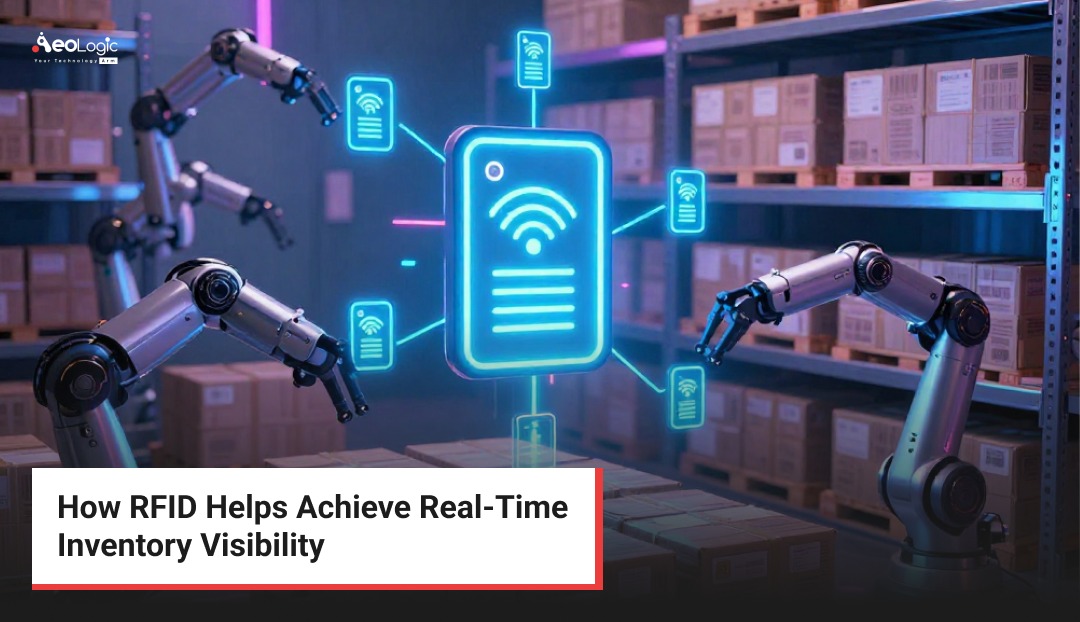

In today’s hyper-connected, on-demand business environment, knowing exactly what inventory you have, where it is, and when it moves is no longer optional. Customers expect instant availability, operations demand speed, and leadership requires data-driven decisions. However, traditional inventory systems struggle to keep up with this pace. This is where RFID Real-Time Inventory changes the game.
Unlike manual stock checks or barcode-based systems that rely heavily on human intervention, RFID brings automation, intelligence, and continuous monitoring into inventory operations. With RFID solutions, businesses gain live visibility into stock movement across warehouses, retail floors, manufacturing units, and distribution networks.
As supply chains grow more complex, companies that fail to adopt RFID risk stockouts, overstocking, and lost revenue. Therefore, understanding how RFID works and how it delivers real-time inventory insights has become critical for sustainable growth.
What RFID Real-Time Inventory Means
At its core, RFID Real-Time Inventory refers to the ability to track inventory automatically and continuously using Radio Frequency Identification technology. Each item is tagged with an RFID tag that communicates wirelessly with readers placed throughout the facility.
Unlike barcodes, RFID does not require line-of-sight scanning. Multiple items can be read simultaneously, even when they are inside cartons or moving through dock doors. As a result, RFID Real-Time Inventory delivers a live, always-accurate view of stock levels and locations.
This capability transforms static inventory data into dynamic intelligence. Businesses no longer rely on delayed reports or manual counts. Instead, RFID inventory visibility allows decision-makers to see inventory changes as they happen.
Why RFID Real-Time Inventory Visibility Matters Today
Real-time inventory visibility matters more today than ever before because modern businesses operate in an environment defined by speed, accuracy, and constant change. Firstly, customer expectations have evolved significantly. Buyers now expect products to be available instantly, whether they shop online, in-store, or across multiple channels. Without real-time visibility, inventory data becomes outdated quickly, leading to stockouts, delayed deliveries, and lost sales. Moreover, supply chains have grown increasingly complex and vulnerable to disruptions.
Therefore, businesses need immediate access to inventory data to respond proactively rather than reactively. Real-time visibility enables organizations to identify shortages, reallocate stock, and maintain continuity during unexpected disruptions. Additionally, rising operational costs and labor shortages make manual inventory processes inefficient and error-prone. As a result, automated and real-time inventory tracking has become essential for maintaining accuracy without increasing workforce pressure. Furthermore, data-driven decision-making is now a core requirement for competitiveness.
When inventory data updates instantly, leaders can forecast demand more accurately, optimize replenishment cycles, and reduce excess stock. Meanwhile, real-time visibility also strengthens collaboration across departments by ensuring everyone works from the same accurate data source. Ultimately, real-time inventory visibility is no longer a competitive advantage—it is a necessity. Businesses that adopt real-time inventory insights gain agility, reduce waste, improve customer satisfaction, and build resilient operations capable of thriving in today’s fast-paced digital economy.
How RFID enables real-time inventory visibility
Traditional inventory methods rely on periodic stock counts. However, these snapshots quickly become outdated. RFID Real-Time Inventory replaces snapshots with a live video feed of inventory movement.
Automated Data Capture with RFID Real-Time Inventory
RFID technology enables real-time inventory visibility by capturing data automatically without manual intervention. Unlike traditional barcode systems, RFID tags communicate wirelessly with readers, allowing multiple items to be scanned simultaneously. As a result, RFID Real-Time Inventory updates stock information instantly whenever goods move across checkpoints. Moreover, this automated data capture eliminates delays caused by manual scanning, ensuring inventory records remain accurate at all times. Therefore, businesses gain continuous visibility into inventory levels, locations, and movement patterns across facilities.
Continuous Tracking Across the Supply Chain
RFID systems provide uninterrupted tracking throughout the entire inventory lifecycle. From receiving and storage to picking, packing, and shipping, RFID readers detect item movement in real time. Consequently, inventory data flows seamlessly into centralized systems without human involvement. Meanwhile, this constant flow of information allows organizations to identify bottlenecks, misplaced items, or unexpected stock movements instantly. Additionally, continuous tracking improves coordination between warehouses, distribution centers, and retail outlets, ensuring inventory is always where it is needed.
Real-Time Updates Powered by RFID Real-Time Inventory
One of the most powerful aspects of RFID Real-Time Inventory is its ability to deliver live updates. Each time an item enters or exits a location, the system records the change automatically. Hence, inventory counts are always current, even in high-volume environments. Furthermore, real-time updates enable faster decision-making by providing accurate data for demand planning, replenishment, and order fulfillment. This level of responsiveness significantly reduces stockouts and overstocking.
Actionable Insights Through System Integration
RFID enables real-time inventory visibility by integrating with inventory management, ERP, and analytics platforms. Therefore, raw RFID data transforms into meaningful insights. Managers can monitor performance, predict demand trends, and optimize workflows. Ultimately, RFID turns inventory data into a strategic asset that supports smarter, faster, and more informed business decisions.
Furthermore, because RFID reads items in bulk, inventory audits that once took days can now be completed in minutes. This level of accuracy directly supports better planning, forecasting, and customer satisfaction.
Key Benefits of RFID Real-Time Inventory
Improved Inventory Accuracy and Data Reliability
RFID Real-Time Inventory significantly improves inventory accuracy by eliminating manual data entry and human error.
-
Inventory data updates automatically with every movement
-
Errors caused by missed or duplicate scans are reduced
-
Stock records remain consistent across all systems
As a result, businesses can trust their inventory data for daily operations and strategic planning.
Faster Inventory Operations and Process Efficiency
RFID Real-Time Inventory accelerates routine inventory tasks across warehouses and retail environments.
-
Bulk scanning enables faster receiving and shipping
-
Cycle counts can be completed without halting operations
-
Order picking and verification become quicker and more accurate
Consequently, organizations experience higher productivity and smoother workflows.
Enhanced RFID Real-Time Inventory Visibility
One of the most impactful benefits is continuous visibility into inventory status.
-
Inventory levels update instantly across locations
-
Item location tracking reduces search time
-
Stock movement is monitored in real time
Therefore, teams can respond quickly to changes and avoid operational disruptions.
Reduced Operational Costs and Labor Dependency
By automating inventory tracking, RFID Real-Time Inventory lowers operational expenses.
-
Manual stock checks are minimized
-
Labor costs associated with inventory audits decrease
-
Inventory shrinkage and losses are easier to detect
Meanwhile, staff can focus on higher-value activities instead of repetitive tasks.
Better Demand Planning and Decision-Making
RFID Real-Time Inventory provides accurate data that supports smarter decisions.
-
Real-time insights improve demand forecasting
-
Overstocking and stockouts are significantly reduced
-
Inventory replenishment becomes more precise
Ultimately, these benefits lead to improved customer satisfaction, stronger supply chain performance, and more agile business operations.
Automated Inventory Tracking RFID in Daily Operations
Automated inventory tracking RFID plays a vital role in streamlining daily operations by removing the need for manual inventory checks and repetitive scanning tasks. In traditional environments, employees spend significant time counting stock, updating records, and correcting errors. However, with automated RFID systems in place, inventory data is captured automatically whenever items move through designated areas. As a result, inventory levels update in real time, ensuring accuracy without disrupting routine workflows. This continuous data capture allows businesses to maintain reliable inventory records throughout the day.
Moreover, automated inventory tracking RFID improves operational speed and consistency across departments. During receiving and put-away processes, RFID readers instantly record incoming goods without opening packages or stopping material handling equipment. Similarly, during picking and packing, RFID validates the correct items, reducing fulfillment errors. Meanwhile, cycle counting becomes a background activity rather than a scheduled disruption. Teams no longer need to halt operations for audits, which improves productivity and reduces downtime.
Additionally, automated RFID tracking enhances visibility and accountability. Managers gain immediate insight into inventory movement, enabling faster issue resolution and better decision-making. Therefore, businesses experience smoother operations, reduced labor dependency, and improved customer satisfaction. By embedding automation into everyday processes, RFID transforms inventory management into a seamless, efficient, and data-driven operation.
RFID Real-Time Inventory Across Industries
| Industry | How RFID Real-Time Inventory Is Used | Key Value Delivered |
|---|---|---|
| Retail | Retailers use RFID Real-Time Inventory to track products from backrooms to store shelves in real time. RFID tags enable instant stock updates whenever items are moved, sold, or replenished. | Improves on-shelf availability, reduces stockouts, supports omnichannel fulfillment, and enhances customer satisfaction. |
| Warehousing & Logistics | In warehouses, RFID Real-Time Inventory tracks inbound, stored, and outbound goods automatically. Readers placed at dock doors and storage zones capture movement without manual scanning. | Enables faster receiving and shipping, increases inventory accuracy, and reduces labor-intensive cycle counts. |
| Manufacturing | Manufacturers use RFID Real-Time Inventory to monitor raw materials, work-in-progress, and finished goods throughout production lines. | Minimizes production delays, prevents material shortages, and improves production planning efficiency. |
| Healthcare | Hospitals and healthcare facilities rely on RFID Real-Time Inventory to track medical supplies, equipment, and pharmaceuticals. | Ensures critical items are always available, improves patient safety, and supports regulatory compliance. |
| Supply Chain & Distribution | Distribution centers apply RFID Real-Time Inventory for end-to-end visibility across multiple locations and partners. | Enhances coordination, reduces inventory discrepancies, and improves supply chain transparency. |
| Apparel & Fashion | Fashion brands use RFID Real-Time Inventory to manage high SKU volumes and frequent stock movement. | Enables accurate size-level visibility, reduces lost sales, and supports fast restocking cycles. |
| Automotive & Industrial | RFID Real-Time Inventory tracks parts, tools, and components across plants and warehouses. | Prevents line stoppages, improves asset utilization, and enhances operational reliability. |
Challenges in RFID Real-Time Inventory Adoption
Initial Investment and Infrastructure Requirements
One of the primary challenges in adopting RFID systems is the initial investment. RFID hardware such as tags, readers, antennas, and supporting software requires upfront capital. Moreover, businesses may need to modify existing infrastructure to support seamless RFID data capture. However, while the initial cost can seem high, the long-term operational savings and efficiency gains often justify the investment.
Data Accuracy and Environmental Interference
RFID performance can be affected by environmental factors such as metal surfaces, liquids, and signal interference. These conditions may reduce read accuracy if systems are not properly designed. Therefore, businesses must carefully select RFID tags and configure reader placement to ensure consistent data capture. Proper testing and calibration are essential to maintain reliable real-time inventory data.
Change Management with RFID Real-Time Inventory
Implementing RFID technology requires changes to existing workflows and employee habits. Staff members who are accustomed to manual or barcode-based systems may initially resist the shift to automated processes. Hence, effective training and clear communication are critical. When employees understand how RFID simplifies their tasks, adoption becomes smoother and more successful.
System Integration in RFID Real-Time Inventory Environments
Another key challenge is integrating RFID Real-Time Inventory with existing ERP, WMS, or inventory management systems. Without proper integration, RFID data may remain siloed and underutilized. Therefore, businesses must ensure seamless data flow between systems to fully leverage real-time insights. Choosing compatible platforms and experienced implementation partners helps reduce integration complexity.
Scaling and Ongoing Optimization
Finally, scaling RFID solutions across multiple locations can be complex. As operations grow, systems must be continuously optimized to maintain performance. Regular monitoring, updates, and process refinement are necessary to sustain long-term value from RFID investments.
Solutions That Make RFID Deployment Successful
To overcome challenges, businesses should start with pilot projects. This approach allows testing RFID Real-Time Inventory in real environments before scaling.
Strategic Planning Before RFID Implementation
Successful RFID deployment begins with clear planning and defined objectives. Businesses must identify where visibility gaps exist and how RFID will address them. Moreover, aligning RFID goals with operational KPIs ensures measurable outcomes. A well-planned strategy reduces risks and creates a strong foundation for long-term success.
Pilot Programs Using RFID Real-Time Inventory
Launching a pilot project with RFID Real-Time Inventory allows organizations to test the technology in real operational conditions. Instead of deploying across all locations at once, businesses can evaluate performance, identify challenges, and fine-tune configurations. Consequently, pilot programs minimize disruptions and build internal confidence before full-scale implementation.
Right Technology Selection for Reliable Performance
Choosing the correct RFID tags, readers, and software is critical. Environmental factors such as metal, liquids, and movement patterns must be considered. Therefore, selecting technology tailored to operational needs improves read accuracy and system reliability. Proper hardware selection directly impacts long-term performance.
Seamless Integration with RFID Real-Time Inventory Systems
For maximum value, RFID Real-Time Inventory must integrate seamlessly with existing ERP, WMS, and inventory management platforms. Integration ensures real-time data flows across systems without delays or duplication. As a result, businesses gain a unified view of inventory that supports faster and more informed decision-making.
Training and Change Management for Adoption
Employee training plays a vital role in deployment success. Teams must understand how RFID improves daily operations and reduces manual work. Moreover, involving employees early encourages acceptance and ownership. Continuous training ensures smooth adoption and sustained performance.
Continuous Monitoring and Optimization
Finally, RFID systems require ongoing optimization. Regular performance reviews, system updates, and process adjustments ensure continued accuracy and scalability. Therefore, continuous improvement helps businesses extract long-term value from RFID investments.
Future Trends in RFID Real-Time Inventory
- The future of RFID Real-Time Inventory is closely tied to emerging technologies such as AI, IoT, and advanced analytics.
- AI-powered analytics will transform RFID inventory visibility data into predictive insights. Instead of reacting to stock shortages, businesses will anticipate them.
- Cloud-based platforms will make Automated inventory tracking RFID more scalable and accessible, especially for mid-sized enterprises.
- Additionally, sustainability initiatives will benefit from RFID Real-Time Inventory by reducing waste, overproduction, and unnecessary transportation.
- Therefore, Benefits of RFID for inventory management will continue to expand as technology evolves.
Strategic Value Beyond Inventory
- RFID Real-Time Inventory is no longer limited to stock tracking. It enables broader digital transformation.
- Real-time data improves supplier collaboration, enhances demand forecasting, and strengthens customer trust.
- Furthermore, RFID inventory visibility supports compliance, traceability, and risk management in regulated industries.
- Hence, RFID becomes a strategic asset rather than just an operational tool.
Conclusion
In an era where speed, accuracy, and visibility define success, RFID Real-Time Inventory stands out as a transformative solution. By enabling continuous tracking, reducing manual effort, and delivering actionable insights, RFID empowers businesses to stay competitive and resilient.
The combination of RFID inventory visibility and Automated inventory tracking RFID eliminates guesswork, improves decision-making, and drives operational excellence.
Organizations that embrace this technology today position themselves for long-term growth and agility. Companies like Aeologic Technologies help businesses unlock the full potential of RFID as part of a broader digital transformation consulting strategy.
Frequently Asked Questions
Q1. How RFID enables real-time inventory visibility compared to barcodes?
RFID captures inventory data automatically and continuously without line-of-sight, unlike barcodes that require manual scanning.
Q2. What are the main benefits of RFID for inventory management?
The Benefits of RFID for inventory management include higher accuracy, reduced labor costs, faster operations, and improved customer satisfaction.
Q3. Is RFID Real-Time Inventory suitable for small businesses?
Yes, scalable solutions make RFID Real-Time Inventory accessible to businesses of all sizes.
Q4. Does Automated inventory tracking RFID reduce human errors?
Absolutely. Automated inventory tracking RFID eliminates missed scans, duplicate entries, and manual data mistakes.
Q5. How long does it take to see ROI from RFID implementation?
Most businesses begin seeing ROI within 6–12 months due to improved efficiency and reduced losses.