
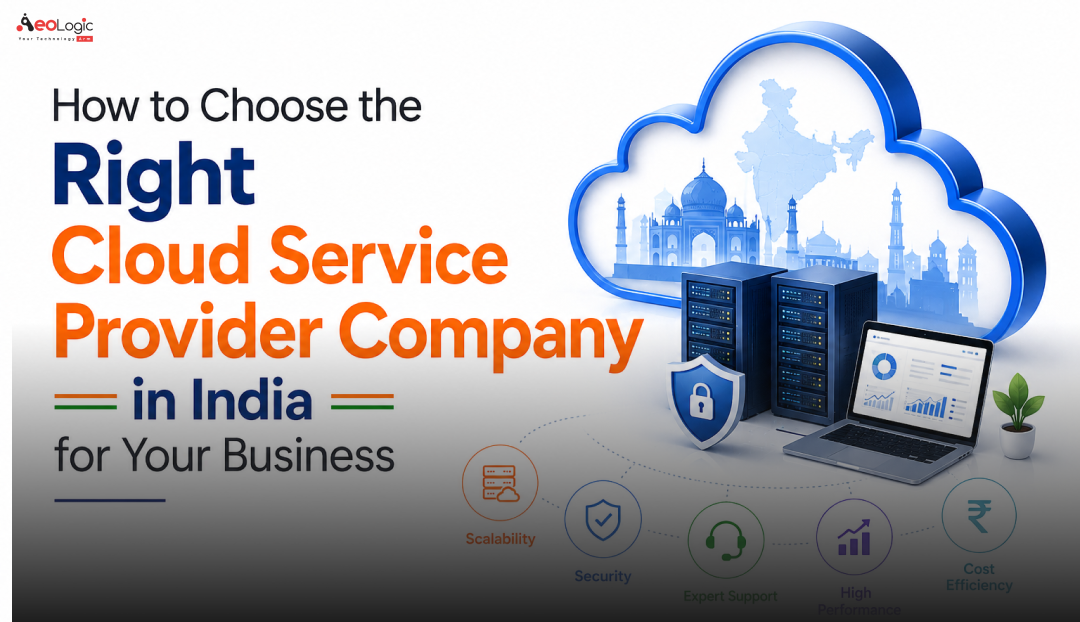

As businesses increasingly embrace digital transformation, cloud computing has become a fundamental component of modern IT infrastructure. Organizations of all sizes are leveraging cloud technologies to improve scalability, enhance operational efficiency, reduce infrastructure costs, and accelerate innovation. However, achieving these benefits depends largely on selecting the right cloud partner. With numerous vendors offering cloud solutions across the country, finding the right Cloud Service Provider Company in India can be a challenging task.
Every provider offers different capabilities, pricing models, security frameworks, and support services. Choosing the wrong partner can lead to performance issues, security risks, unexpected costs, and limitations in future growth.
This guide explores the key factors businesses should evaluate when selecting a cloud service provider and how to ensure the chosen partner aligns with both current requirements and long-term business objectives.
Understanding Your Business Requirements Before Selecting a Cloud Provider
Before comparing cloud vendors, organizations must first assess their own business needs. A clear understanding of operational requirements helps narrow down potential providers and ensures the selected solution supports business goals effectively.
Companies should evaluate their existing IT infrastructure, application workloads, storage requirements, security expectations, compliance obligations, and future scalability needs. Businesses operating in sectors such as healthcare, banking, manufacturing, retail, and government services often have industry-specific requirements that influence cloud deployment decisions.
A reliable Cloud Service Provider Company in India should be capable of understanding these business-specific needs and recommending suitable cloud solutions rather than offering a one-size-fits-all approach.
Evaluate the Types of Cloud Services Offered
Different organizations require different cloud deployment models depending on their operational priorities. Therefore, it is important to assess the range of services offered by a cloud provider.
Public cloud solutions are often preferred by businesses seeking cost-effective scalability and flexibility. Private cloud environments provide enhanced control and security for organizations handling sensitive data. Hybrid cloud solutions combine the advantages of both public and private infrastructures, enabling businesses to optimize workloads efficiently.
The ideal cloud provider should offer flexible deployment options that support evolving business requirements. A reputable Cloud Service Provider Company in India will typically provide consultation services to help businesses determine which cloud model best suits their operational goals.
Assess Security and Compliance Capabilities
Security remains one of the most critical considerations when migrating business operations to the cloud. Since organizations store sensitive customer information, financial records, intellectual property, and operational data in cloud environments, robust security measures are essential.
Businesses should evaluate whether the provider offers advanced security features such as data encryption, identity and access management, threat detection, network monitoring, multi-factor authentication, and regular security audits.
In addition to security controls, compliance certifications should also be reviewed carefully. Depending on the industry, businesses may require adherence to standards such as ISO certifications, GDPR requirements, PCI DSS compliance, or industry-specific regulatory frameworks.
A trustworthy Cloud Service Provider Company in India should demonstrate transparency regarding its security practices and maintain compliance with recognized industry standards.
Consider Scalability and Future Growth Potential
Technology requirements evolve continuously as businesses grow. Therefore, selecting a cloud provider that can support future expansion is essential for long-term success.
Organizations should assess how easily resources such as storage, computing power, networking capabilities, and application support can be scaled up or down. The ability to adapt quickly to changing business demands enables companies to remain agile and competitive.
An experienced Cloud Service Provider Company in India will provide scalable infrastructure solutions that accommodate growth without requiring major system overhauls or costly migrations in the future.
Examine Service Reliability and Performance
Downtime can significantly impact business operations, customer satisfaction, and revenue generation. As a result, service reliability should be a major factor when evaluating cloud providers.
Businesses should review uptime guarantees, service level agreements (SLAs), redundancy mechanisms, disaster recovery capabilities, and data backup procedures. Understanding how the provider handles outages and maintains service continuity can help reduce operational risks.
The right Cloud Service Provider Company in India should have a proven track record of delivering high-performance cloud environments with minimal downtime and strong business continuity measures.
Analyze Data Center Infrastructure and Geographic Presence
The quality of a cloud provider’s infrastructure directly affects application performance, data accessibility, and user experience. Businesses should investigate the provider’s data center capabilities, including network architecture, hardware standards, backup systems, and disaster recovery facilities.
Geographic presence is another important consideration. Data centers located closer to end users can improve application responsiveness and reduce latency. Additionally, businesses with operations across multiple regions may benefit from providers that offer geographically distributed infrastructure.
A leading Cloud Service Provider Company in India typically operates or partners with multiple data centers to ensure reliable performance and high availability.
Review Technical Support and Managed Services
Cloud adoption often requires ongoing technical assistance, infrastructure management, monitoring, and troubleshooting. Therefore, evaluating support capabilities is essential when choosing a cloud partner.
Organizations should understand the provider’s support structure, including response times, escalation procedures, support channels, and availability. Providers offering 24/7 support can help businesses address issues quickly and minimize operational disruptions.
Many companies also benefit from managed cloud services that handle routine maintenance, updates, security monitoring, and performance optimization. A dependable Cloud Service Provider Company in India should offer comprehensive support services that enable internal teams to focus on strategic initiatives rather than infrastructure management.
Understand Pricing Models and Cost Transparency
Cloud computing offers significant cost advantages when implemented correctly. However, hidden costs and complex pricing structures can create unexpected financial challenges.
Businesses should carefully review pricing models, including charges for storage, computing resources, data transfers, backup services, security features, and support plans. Transparent pricing helps organizations forecast expenses accurately and avoid budget overruns.
A professional Cloud Service Provider Company in India should provide clear pricing information and assist businesses in selecting cost-efficient cloud solutions aligned with operational requirements.
Evaluate Cloud Migration Expertise
Migrating applications and data to the cloud can be a complex process involving planning, testing, execution, and post-migration optimization. Selecting a provider with proven migration expertise can significantly reduce implementation risks.
Businesses should inquire about the provider’s migration methodology, previous project experience, migration tools, and strategies for minimizing downtime during the transition process.
An experienced Cloud Service Provider Company in India will offer end-to-end migration support, helping organizations move workloads securely and efficiently while maintaining business continuity.
Check Customer References and Industry Experience
A provider’s past performance often serves as a strong indicator of future success. Businesses should review case studies, customer testimonials, industry recognition, and project portfolios before making a decision.
Providers with experience across multiple industries are often better equipped to understand unique business challenges and recommend effective cloud strategies. Customer references can provide valuable insights into service quality, reliability, support responsiveness, and overall satisfaction.
Choosing a well-established Cloud Service Provider Company in India with a strong reputation can significantly increase the likelihood of a successful cloud transformation journey.
Importance of Innovation and Emerging Technologies
Cloud computing continues to evolve rapidly with advancements in artificial intelligence, machine learning, edge computing, data analytics, and automation technologies. Organizations should consider whether a provider invests in innovation and offers access to emerging cloud capabilities.
A forward-thinking Cloud Service Provider Company in India can help businesses leverage modern technologies that drive efficiency, improve decision-making, and create competitive advantages in the marketplace.
Partnering with an innovative provider ensures that cloud infrastructure remains aligned with future technological developments and evolving business needs.
Conclusion
Selecting the right Cloud Service Provider Company in India is a strategic decision that can significantly influence an organization’s digital transformation success. Beyond evaluating pricing and infrastructure, businesses must consider factors such as security, compliance, scalability, reliability, technical support, migration expertise, and long-term innovation capabilities.
By carefully assessing these critical areas, organizations can identify a cloud partner that not only meets current operational requirements but also supports future growth and technological advancement. The right cloud provider becomes more than a technology vendor—it becomes a long-term partner in achieving business agility, efficiency, and sustainable success in an increasingly digital world.
Frequently Asked Questions (FAQs)
Q1. What does a Cloud Service Provider Company in India do?
A Cloud Service Provider Company in India offers cloud-based infrastructure, platforms, and software solutions that help businesses store data, host applications, manage workloads, and improve operational efficiency. These providers enable organizations to access computing resources on demand without investing heavily in physical IT infrastructure. Their services may include cloud hosting, cloud migration, backup and disaster recovery, managed cloud services, security management, and ongoing technical support.
Q2. How do I choose the best Cloud Service Provider Company in India for my business?
Choosing the right cloud service provider requires evaluating several factors, including security standards, compliance certifications, scalability, infrastructure reliability, pricing transparency, technical support, and cloud migration expertise. Businesses should also assess the provider’s experience in their industry and ensure the offered solutions align with both current requirements and future growth plans.
Q3. What are the benefits of working with a Cloud Service Provider Company in India?
Partnering with a reliable cloud service provider helps businesses reduce infrastructure costs, improve scalability, enhance data security, and increase operational flexibility. Cloud solutions also support remote work environments, enable faster deployment of applications, improve disaster recovery capabilities, and provide access to advanced technologies such as artificial intelligence, analytics, and automation tools.
Q4. Is cloud computing secure for storing business data?
Yes, cloud computing can be highly secure when implemented through a reputable provider. Most leading cloud service providers use advanced security measures such as data encryption, multi-factor authentication, access controls, continuous monitoring, and regular security audits. Businesses should also verify that the provider complies with relevant industry standards and regulatory requirements before migrating sensitive data to the cloud.
Q5. What is the difference between public, private, and hybrid cloud solutions?
Public cloud solutions use shared infrastructure managed by a cloud provider and are often preferred for their cost-effectiveness and scalability. Private cloud environments are dedicated to a single organization and offer greater control and security. Hybrid cloud solutions combine both public and private cloud environments, allowing businesses to optimize workloads, improve flexibility, and maintain greater control over sensitive data while benefiting from public cloud scalability.
Q6. Why is scalability important when selecting a Cloud Service Provider Company in India?
Scalability ensures that cloud resources can grow or shrink based on business needs. As organizations expand, their storage, computing power, and application requirements often increase. A scalable cloud environment allows businesses to adapt quickly to changing demands without significant infrastructure investments or disruptions. Choosing a provider that offers flexible scaling capabilities helps support long-term business growth and operational efficiency.