


UHF handheld RFID Reader play a crucial role in industries such as retail, logistics, healthcare, and asset tracking, offering enhanced operational efficiency and accuracy. Among the best options available, various models stand out due to their performance, durability, and ease of use.
Benefits and Uses of Handheld RFID Readers
A handheld RFID reader is a versatile and efficient tool used across various industries to streamline operations, reduce human error, and improve data accuracy. These devices are widely adopted in logistics, warehousing, retail, healthcare, and asset management, offering numerous advantages over traditional barcode scanning and manual tracking systems.
One of the most significant benefits of a UHF handheld RFID reader is its ability to read multiple tags simultaneously, drastically reducing the time required for inventory counts and asset tracking. Unlike barcode scanners, which require a direct line of sight, a UHF RFID tag reader can scan tags from a distance, even through packaging and obstacles. This capability makes the UHF RFID Handheld Reader ideal for environments with high-volume inventory or complex logistics operations.
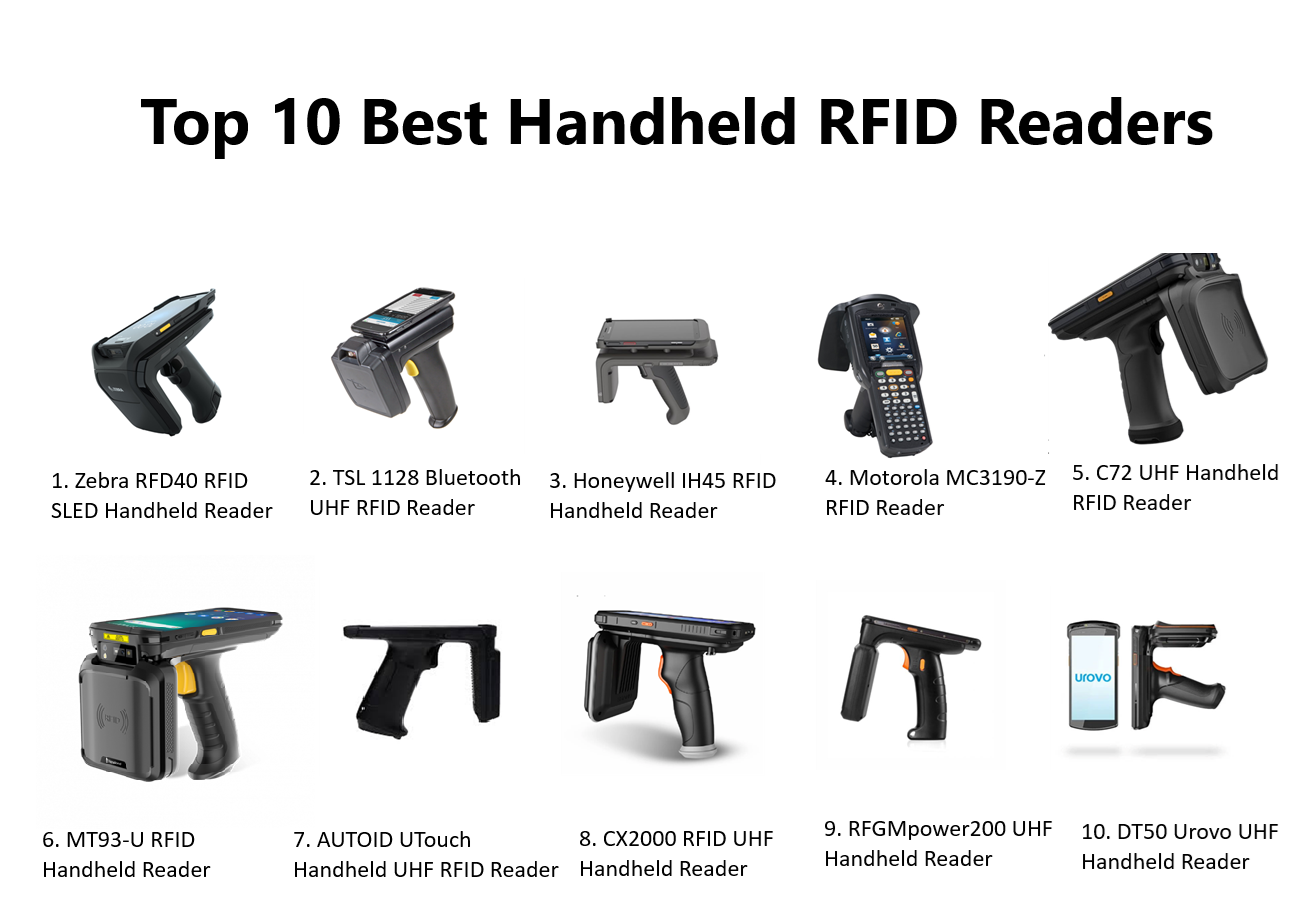
Top 10 UHF Handheld RFID Readers
Below, we present the top 10 best handheld RFID readers, their features, and how they stand out in the market.
1. Zebra RFD40 RFID Handheld Reader
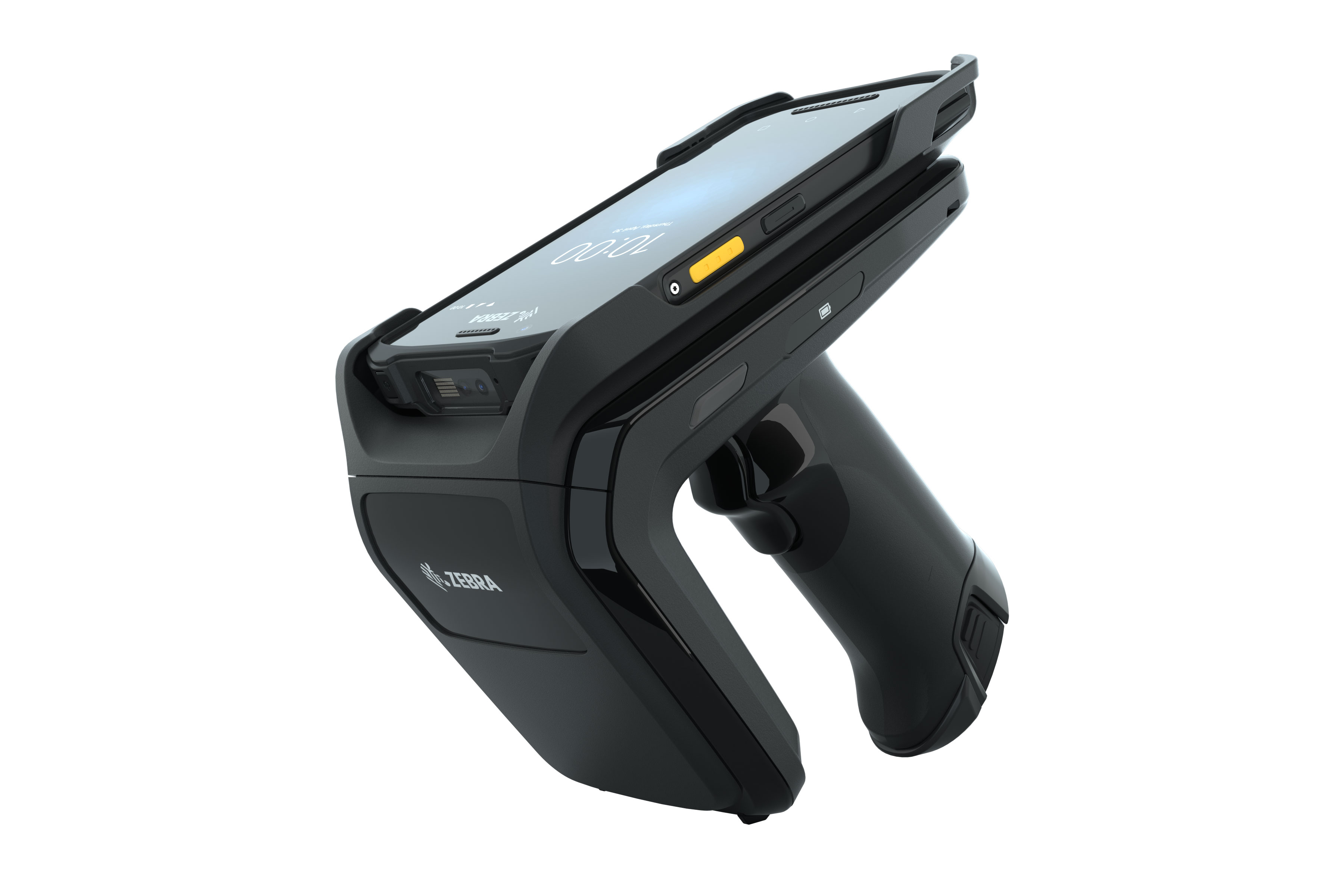
The Zebra RFD40 is a high-performance handheld RFID reader designed for fast and accurate reading. It features:
- Ultra-fast reading speeds
- Ergonomic design for prolonged use
- Seamless integration with Zebra mobile computers
- Ideal for UHF RFID tag reader applications
2. TSL 1128 Bluetooth UHF RFID Reader
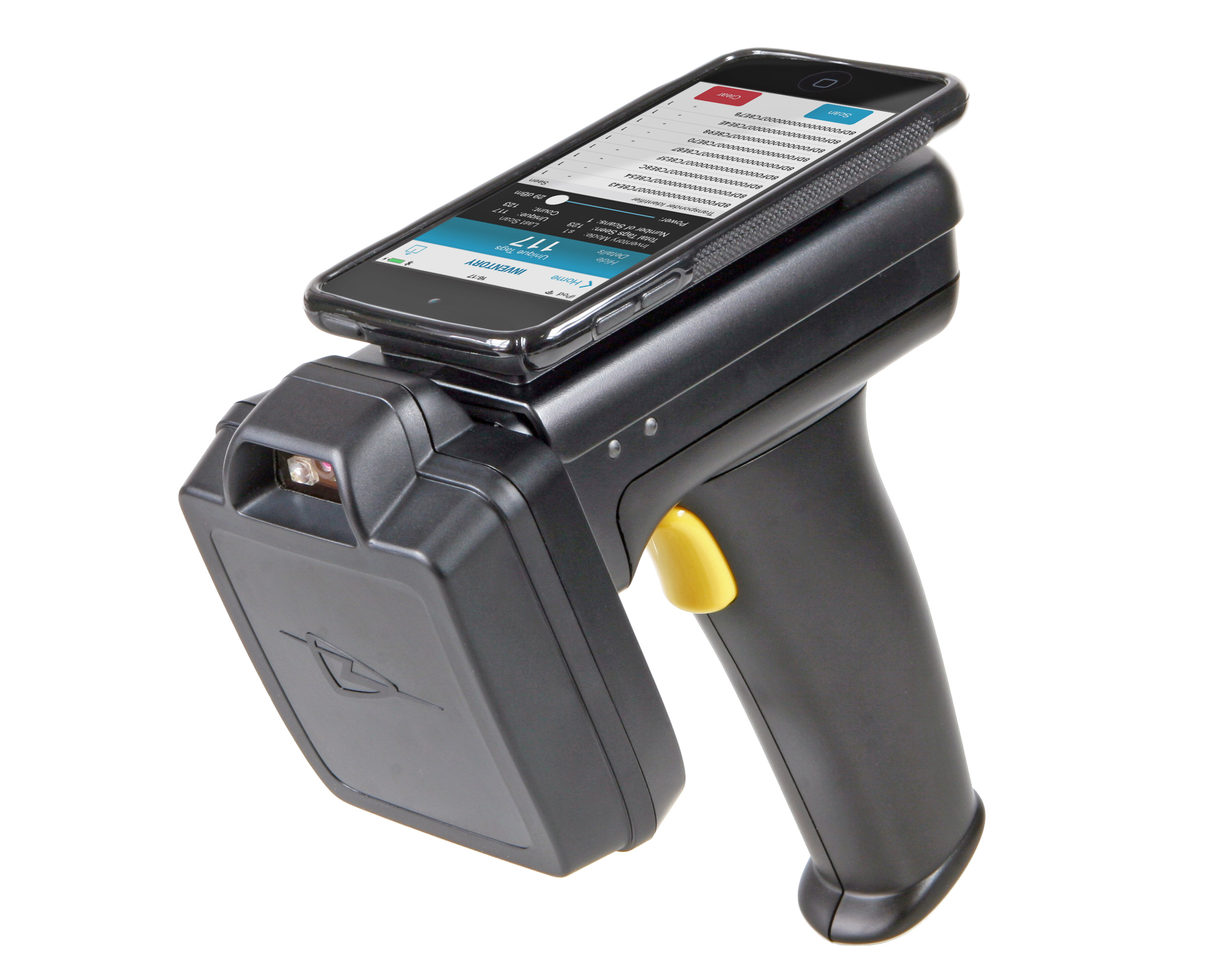
This reader offers flexibility with its Bluetooth connectivity, making it ideal for mobile applications. Key features include:
- High read range for UHF tags
- Compatibility with multiple operating systems
- Durable build for rugged environments
- Considered one of the best handheld RFID readers available
3. Honeywell IH45 RFID Reader
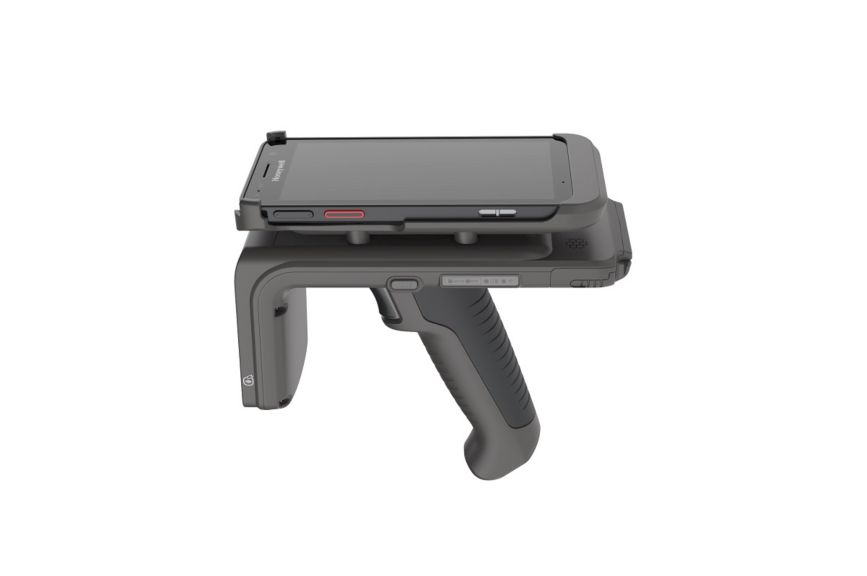
Honeywell’s IH45 is known for its excellent battery life and seamless integration with enterprise mobility solutions. Features include:
- Extended battery performance
- High accuracy RFID tag reading
- Compact and lightweight design
- Perfect for those looking for a reliable RFID reader handheld device
4. Motorola MC3190-Z RFID Reader

The Motorola MC3190-Z is a versatile and rugged RFID handheld reader known for its reliability in industrial applications. Highlights include:
- High durability for harsh environments
- Ergonomic design with a pistol grip
- Optimized for inventory and asset management
- Frequently mentioned in handheld RFID reader reviews
5. C72 UHF Handheld RFID Reader
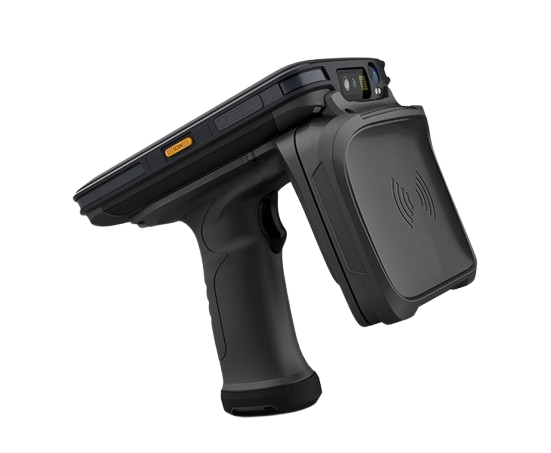
The C72 is a budget-friendly yet powerful option for businesses needing a high-performance UHF RFID handheld reader. Features include:
- Long read range up to 20 meters
- Android-based operating system for flexibility
- Rugged and waterproof design
- One of the best long-range handheld RFID readers
6. MT93-U RFID Reader
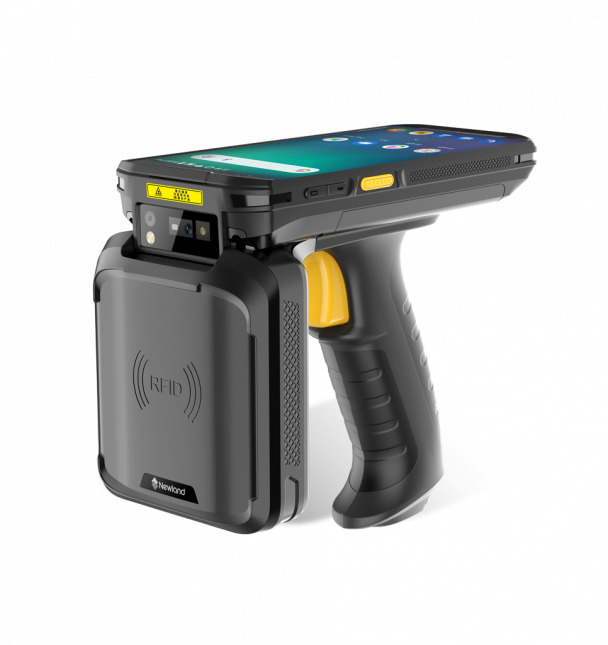
A high-performance UHF RFID reader handheld device with a powerful scanning capability, the MT93-U is ideal for fast-paced environments. Features:
- Advanced antenna technology for high-speed reading
- Large battery capacity for extended use
- User-friendly touchscreen interface
- Competitively priced for those researching handheld RFID reader cost
7. AUTOID UTouch Reader
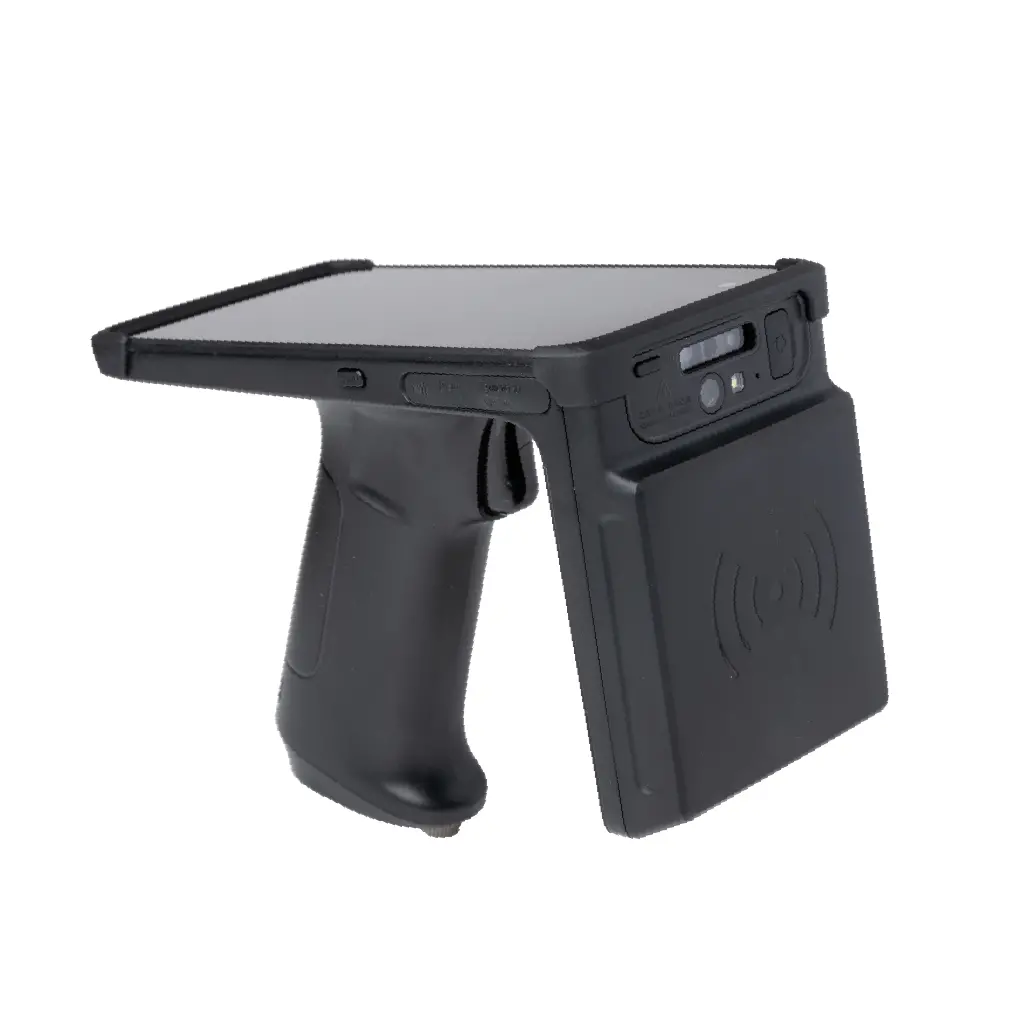
AUTOID UTouch combines RFID and barcode scanning in a compact design. Features include:
- Dual functionality (RFID and barcode scanner)
- Lightweight and portable
- High-speed tag identification
- Considered a reliable handheld RFID tag reader
8. CX2000 UHF Handheld RFID Reader

This UHF RFID reader handheld device is well-suited for retail and warehouse applications with its impressive performance. Features include:
- High-speed processing capability
- Easy integration with ERP and WMS systems
- Large storage capacity
- Frequently mentioned in RFID UHF handheld reader reviews
9. RFGMpower200 Handheld RFID Reader
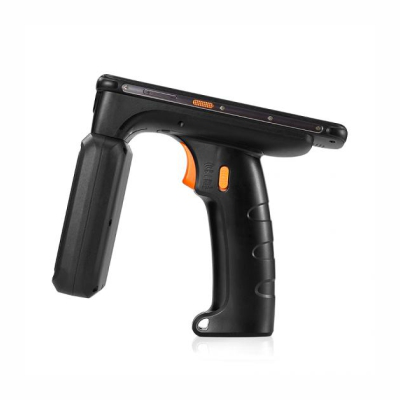
This UHF RFID handheld reader is known for its durability and efficiency in managing assets and inventory. Highlights include:
- Long reading distance
- Strong battery life
- Compact and ergonomic design
- A cost-effective choice for those seeking a UHF RFID reader handheld device
10. DT50 Urovo RFID Reader

A cost-effective and efficient RFID reader, the DT50 Urovo offers great usability in logistics and warehousing. Features include:
- Android-based OS for easy customization
- Fast scanning speed
- High drop resistance for rugged use
- One of the best budget-friendly handheld RFID readers
Conclusion
Choosing the uhf handheld RFID reader depends on your specific needs, such as range, connectivity, durability, and software compatibility. Whether you require a rugged reader for industrial use or a lightweight option for retail, the above options cover a wide range of applications. Investing in a high-quality RFID reader ensures efficiency, accuracy, and productivity in your operations.
FAQs
1) What is a UHF handheld RFID reader used for?
A UHF handheld RFID reader is used to identify and track tagged items wirelessly using radio waves. Unlike traditional scanning, it does not require direct line-of-sight, making it ideal for warehouses, retail stores, logistics hubs, and manufacturing units. These devices help businesses locate assets, verify shipments, manage stock counts, and reduce manual labor. With the ability to read multiple tags at once, handheld UHF RFID readers significantly improve speed and accuracy in inventory and asset management operations.
2) How far can a handheld UHF RFID reader detect tags?
Most handheld UHF RFID readers can detect tags from 3 to 10 meters depending on the device power output, antenna quality, and tag type. Some industrial-grade models may reach up to 15 meters in open environments. However, real-world performance can vary based on interference from metal racks, liquids, or dense packaging. Businesses should test read range in their actual working environment to ensure consistent performance before deploying readers across warehouses or field operations.
3) Can this work with smartphones or tablets?
Yes, many UHF handheld RFID readers support integration with smartphones and tablets through Bluetooth, Wi-Fi, or USB connections. These devices often work with Android-based inventory apps or custom enterprise solutions. Mobile connectivity allows field teams to track assets, update stock records, and sync data to cloud platforms instantly. This is especially helpful for retail audits, delivery tracking, and remote warehouse operations where fixed RFID gates are not practical.
4) Are UHF handheld RFID readers better than fixed RFID systems?
UHF handheld RFID readers are not always better, but they are more flexible. Fixed RFID systems are ideal for automated tracking at entry/exit points, such as dock doors or conveyor belts. Handheld readers are better for cycle counts, locating missing items, and scanning shelves or pallets manually. Many businesses use both: fixed readers for automation and handheld devices for verification and exception handling. The best option depends on your workflow, budget, and tracking requirements.
5) What industries benefit the most from this reader?
Industries that handle large volumes of items or require fast asset tracking benefit the most. Warehousing and logistics use handheld RFID readers for pallet verification and shipment validation. Retail uses them for rapid stock audits and theft reduction. Manufacturing uses RFID readers to track work-in-progress materials. Healthcare and pharmaceuticals rely on them for equipment tracking and compliance. Any industry needing quick identification without scanning each item individually can gain strong value from UHF RFID technology.
6) What should businesses check before buying?
Before purchasing, businesses should evaluate read range, tag compatibility (EPC Gen2 / ISO standards), battery life, device durability, and software integration support. It is also important to check if the reader supports both RFID and barcode scanning, as many workflows require both technologies. Operating system compatibility (Android, Windows, iOS support via apps) is another key factor. Finally, consider after-sales support and SDK availability if you plan to build custom tracking applications.