
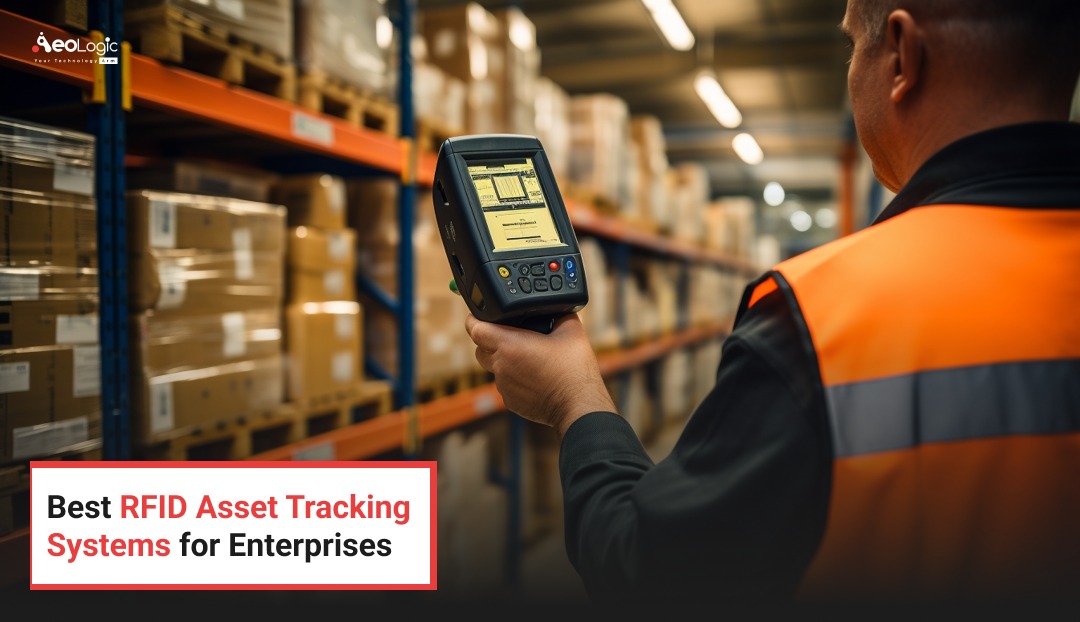

Managing assets across multiple locations has never been more challenging. Enterprises today handle thousands—sometimes millions—of valuable items, including tools and machinery, IT equipment, vehicles, medical devices, inventory, and returnable packaging. Misplaced assets, manual tracking, and poor visibility not only disrupt operations but also drain money and time. This is why RFID asset tracking systems have become essential for enterprises that need real-time control and visibility.
This is where RFID asset tracking systems step in as a reliable, scalable, and future-ready solution. They give enterprises complete visibility of their assets, automate data capture, reduce loss, and unlock stronger operational control. But choosing the right RFID system is not as simple as picking a tag and a reader. Different businesses have different tracking environments, compliance needs, and budgets.
To help you make a confident decision, this guide breaks down the best RFID asset tracking systems for enterprises, along with their features, pricing expectations, and potential ROI.
Why RFID Asset Tracking Is Becoming Essential for Enterprises
Before exploring the top RFID asset tracking systems, it’s important to understand why RFID is becoming the preferred choice for asset tracking:
Real-Time Visibility in RFID Asset Tracking Systems
RFID offers instant location updates without manual scanning. Whether you’re tracking equipment across a factory or IT assets across offices, RFID eliminates blind spots.
Accuracy & Automation with RFID Asset Tracking
Unlike barcodes, RFID tags don’t require line-of-sight. Assets can be scanned automatically—even if they’re moving, stacked, or in restricted areas.
Reduced Operational Losses
Enterprises lose billions every year to misplaced tools, equipment theft, and asset downtime. RFID cuts these losses drastically.
Faster Audits & Compliance
Annual or quarterly audits that once took days can now be completed within hours.
Scalable & Multi-Industry RFID Asset Tracking
From manufacturing to logistics, healthcare to oil & gas—RFID adapts to nearly every enterprise workflow.
With these benefits in mind, let’s explore the best-performing RFID asset tracking systems that enterprises rely on today.
Top RFID Asset Tracking Systems for Enterprises
Below are some of the leading enterprise-grade RFID systems known for reliability, flexibility, and return on investment.
Zebra RFID Asset Tracking System
Zebra is widely recognized for strong RFID hardware, and their asset tracking platform is built to support high-volume enterprise operations.
Key Features
-
Real-time tracking with fixed and handheld readers
-
High-performance UHF RFID tags for tough environments
-
Integrated software dashboard for asset movement history
-
Advanced alerts for unauthorized movement
-
Strong support for warehouses and manufacturing floors
Pricing
Zebra solutions typically fall in the mid-to-premium price range, depending on:
-
Number of fixed readers
-
Reader model (handheld vs. fixed)
-
Software licensing
-
Tag volume
You can expect a starting setup cost of $10,000–$50,000 for enterprise deployments.
ROI Snapshot
-
80% faster asset audits
-
Up to 40% reduction in asset loss
-
Significant labor savings in daily tracking
Impinj RFID Asset Tracking Platform
Impinj is highly trusted for RFID chips and gateways and offers a robust cloud-driven asset tracking system.
Key Features
-
High read accuracy even in dense environments
-
Scalable architecture for large enterprises
-
Strong integration with ERP, WMS, and IoT platforms
-
Reliable RFID gateways for continuous monitoring
-
Excellent tag performance
ROI Snapshot
-
Better equipment visibility leads to fewer delays
-
Reduces compliance risks
-
Ideal for multi-location corporations
Honeywell RFID Asset Tracking
Honeywell provides rugged, industrial-grade RFID solutions suitable for tough environmental conditions such as manufacturing plants, construction sites, and mining.
Key Features
-
Highly durable RFID readers and tags
-
Strong analytics dashboard
-
Asset lifecycle tracking
-
On-premise or cloud data options
-
Excellent for outdoor or harsh environments
ROI Snapshot
-
Ideal for high-value industrial assets
-
Cuts equipment downtime
-
Reduces manual labor costs
SATO RFID Tracking System
SATO specializes in RFID printing and labeling but also offers enterprise asset tracking solutions used in healthcare, retail, and manufacturing.
Key Features
-
Integrated asset and inventory tracking
-
Easy-to-print and encode RFID labels
-
Centralized dashboard for multiple sites
-
Strong data accuracy and reporting
ROI Snapshot
-
Great for IT equipment, returnable packaging, and inventory
-
Reduces shrinkage and improves traceability
Aeologic Technologies – Enterprise RFID Asset Tracking System
Aeologic Technologies offers end-to-end RFID asset tracking solutions designed for enterprises looking for high customization, seamless integration, and strong ROI. Their systems are built to work across manufacturing, logistics, IT, healthcare, and multi-site operations.
Key Features
-
Custom-built RFID asset tracking software
-
Integration with ERP, WMS, CMMS, ITAM platforms
-
Support for fixed, handheld, and hybrid RFID readers
-
Real-time dashboards and automated audit reports
-
Industry-specific workflow customization
-
On-site deployment, training, and long-term support
ROI Snapshot
-
Reduces asset loss and misplacement
-
Automates manual audits
-
Improves operational visibility across locations
-
Highly cost-efficient for enterprises seeking scalability
Enterprise Features to Look For in an RFID Asset Tracking System
Before choosing any system, enterprises should focus on features that guarantee long-term efficiency:
Real-Time Location Visibility
Ensure the platform provides instant updates and area-based tracking.
Tag Read Range & Accuracy
Different environments require different tag types—metal assets, liquids, and moving vehicles need more advanced tags.
Scalability Across Sites
Your enterprise solution must support expansion without major restructuring.
Reporting & Analytics
Look for dashboards that track:
-
Asset utilization
-
Movement history
-
Maintenance cycles
-
Status alerts
Integration Support
Compatibility with systems like:
-
ERP
-
WMS
-
CMMS
-
CRM
-
BI dashboards
Security & Access Controls
A reliable RFID system should have strong data security to prevent unauthorized tracking or data breaches.
How Much Do RFID Asset Tracking Systems Cost?
The cost depends on:
-
Number of assets
-
Tag type and quantity
-
Reader type (fixed, handheld, or hybrid)
-
Software licensing
Integration complexity. General enterprise pricing ranges from $10,000 to $100,000, depending on size and industry demands.
Now that we’ve explored the top RFID asset tracking systems available for enterprises, let’s dive deeper into what really matters when investing—ROI, real-world examples, a practical buying guide, and a detailed comparison to help you choose the right solution with confidence.
How to Calculate ROI for RFID Asset Tracking Systems
To justify the investment, every enterprise wants clear numbers. The good news is that RFID delivers measurable returns across almost every industry. Here are the main areas where companies usually see quick results:
Reduced Asset Loss & Theft
Many enterprises lose anywhere between 2% to 10% of their assets annually due to misplacement, theft, or untracked movement.
RFID helps cut this dramatically by offering real-time monitoring, movement alerts, and digital trail records.
ROI Snapshot:
If a company manages $5 million worth of assets and typically loses 5% per year, that’s $250,000 in annual losses.
RFID can bring that down by 50–80%, delivering immediate savings.
Less Manual Labor & Time Savings
Traditional asset audits require hours—or even days—of manual counting. RFID automates most of this work.
Example:
A 10-hour asset audit becomes a 1-hour RFID scan.
Multiply that across hundreds of audits per year, and the labor savings are substantial.
Higher Utilization of Existing Assets
Many enterprises buy more assets simply because they can’t locate the ones they already own.
RFID gives you clear visibility, reducing unnecessary purchases and letting your team use existing equipment more efficiently.
Less Unplanned Downtime
Downtime caused by missing equipment slows operations and increases labor and production costs.
RFID improves equipment availability and movement accuracy, cutting downtime significantly.
Faster Workflows & Better Productivity
Whether it’s a technician looking for a tool or a warehouse team tracking pallets, RFID helps everyone get more done in less time.
Overall ROI ranges from:
40%–250% within the first year
Even higher over multi-year deployments
Most enterprises see full payback in 6–12 months.
Real-World Case Studies
Below are simplified examples based on typical enterprise outcomes. These provide a realistic idea of what large organizations experience with RFID tracking.
Read More: https://www.aeologic.com/blog/asset-tracking-solutions-with-rfid-technology/
Case Study 1: Large Manufacturing Plant
Challenges:
-
Lost tools and equipment
-
Slow audits
-
Poor tracking of maintenance items
RFID Solution:
-
Installed fixed readers at key entry points
-
Tagged critical assets
-
Enabled mobile readers for floor-wide scanning
Results:
-
70% faster audits
-
50% reduction in misplaced tools
-
Improved production uptime
Case Study 2: Multi-Site IT Company
Challenges:
-
Spread across multiple buildings
-
Frequent asset movement
-
Required accurate reporting for compliance
RFID Solution:
-
Tagged all laptops, servers, routers, and AV equipment
-
Integrated RFID data with existing ITAM platform
Results:
-
Accurate, real-time reporting
-
Strong compliance tracking
-
Eliminated manual data entry
Case Study 3: Healthcare Facility
Challenges:
-
Misplaced medical devices
-
Delayed patient service
-
Inventory overload
RFID Solution:
-
Introduced UHF RFID tags for equipment
-
Real-time location tracking through fixed readers
Results:
-
Faster availability of equipment
-
Reduced rental costs
-
Better staff productivity
How to Choose the Right RFID Asset Tracking System (Practical Buying Guide)
With so many options in the market, choosing the right system can feel overwhelming. Here’s a simple, enterprise-friendly buying guide to help you narrow it down.
Identify the Type of Assets You’re Tracking
Different assets require different tags.
For example:
-
Metal equipment = On-metal RFID tags
-
Vehicles = Long-range tags
-
Documents = Paper-thin labels
Understanding your asset environment is step one.
Decide Between Fixed or Handheld Readers
Fixed readers are best for:
-
High-traffic areas
-
Automatic tracking
-
Real-time visibility
Handheld readers are best for:
-
On-demand scans
-
Mobile teams
-
Periodic audits
Many enterprises use a combination of both.
Check Software Features
Your RFID software should provide:
-
Real-time dashboards
-
Asset history
-
Movement alerts
-
Audit reports
-
Multi-location support
-
User-level access controls
Make sure the software is intuitive—you don’t want your team struggling with a complex interface.
Evaluate Integration Capabilities
Your RFID system should connect seamlessly with:
-
ERP
-
WMS
-
CMMS
-
CRM
-
IT asset management tools
Smooth integration ensures you avoid duplicate work and maintain a single source of truth.
Assess Scalability
Your tracking needs will grow.
Choose a system that supports:
-
Additional assets
-
New locations
-
More users
-
Extra features
This prevents costly replacements later.
Check Durability & Tag Quality
Tags must survive your environment—heat, chemicals, vibration, or weather.
High-quality tags dramatically increase accuracy and lifespan.
Review Vendor Support
RFID is most effective when backed by strong support.
Look for:
-
Onsite assistance
-
Fast technical help
-
Troubleshooting
-
Training
-
Warranty
Trusted vendors save you time and headaches.
Comparison Table: Best RFID Asset Tracking Systems
| System | Best For | Core Strengths | Pricing Level |
|---|---|---|---|
| Zebra | Large enterprises, manufacturing | High accuracy, powerful readers | Medium–High |
| Impinj | Multi-location companies | Scalable, reliable gateways | Medium–High |
| Honeywell | Harsh environments | Rugged readers, strong durability | High |
| SATO | IT assets, healthcare, retail | Easy labeling, strong reporting | Low–Medium |
| Custom/Industry-Specific Systems | Tailored needs, growing businesses | Flexible and customizable | Low–High |
Future Trends in RFID Asset Tracking
The RFID landscape is shifting quickly. Here’s what enterprises can expect in the coming years:
More cloud-based platforms
Simpler deployments and remote access from anywhere.
Hybrid RFID + IoT systems
Combining sensors and RFID for richer data insights.
Better accuracy through AI-free analytics
Not artificial intelligence—simply improved algorithms and data processing.
Eco-friendly tag materials
Reusable tags to reduce waste.
Wider use in office, logistics, and corporate environments
More industries are adopting RFID for everyday operations.
Conclusion
The “best” RFID system depends entirely on your business environment, asset volume, budget, and operational goals.
-
If you need industrial durability: Honeywell
-
If you want high performance and reliability: Zebra
-
If you’re scaling across multiple sites: Impinj
-
If you want cost-effective tracking: SATO
-
If you need customization and local support: A tailored enterprise RFID system
What truly matters is choosing a system that improves visibility, reduces loss, saves labor, and enhances productivity across your entire enterprise. When implemented correctly, RFID asset tracking systems offer fast payback, strong ROI, and long-term operational value.
Selecting the right RFID asset tracking system can transform the way your organization manages equipment, inventory, and high-value assets. With the ability to deliver real-time visibility, reduce operational losses, and streamline audits, RFID offers a strong return on investment for enterprises of every size. The key is finding a solution that aligns with your environment, industry needs, asset volume, and long-term goals.
Aeologic Technologies stands out as a strong contender for enterprises seeking highly customized, scalable, and ROI-driven RFID asset tracking solutions. With deep expertise in automation and IoT, Aeologic helps businesses implement end-to-end RFID systems—covering hardware, software, integration, deployment, and ongoing support.
As asset environments grow more complex, RFID asset tracking systems are no longer optional—they’re essential for maintaining control, improving productivity, and making smarter operational decisions. With Aeologic Technologies and other leading RFID providers, enterprises can achieve real-time visibility, reduce operational losses, streamline audits, and scale confidently into the future.
Aeologic Technologies is an IT consulting company providing expert guidance to align technology investments with business objectives.
FAQs
Q1. What is RFID asset tracking?
RFID asset tracking is a technology that uses Radio Frequency Identification (RFID) tags and readers to automatically monitor and manage the location, status, and movement of assets in real time.
Q2. What is the ROI of implementing an RFID asset tracking system?
The ROI (Return on Investment) of implementing an RFID asset tracking system can be significant for enterprises. They also save considerable labor and time by automating manual audits, inventory checks, and asset tracking processes, allowing staff to focus on higher-value tasks.
Q3. What is the biggest advantage of using an RFID tracking system?
The biggest advantage of using an RFID tracking system is its ability to provide real-time visibility of assets, regardless of their location, movement, or storage conditions. Unlike traditional tracking methods such as barcodes, RFID does not require line-of-sight scanning, allowing multiple items to be read simultaneously and automatically.
Q4. Can RFID track assets in real-time?
Yes, RFID can track assets in real-time. RFID systems use tags attached to assets and readers placed at strategic locations or operated via handheld devices. These readers automatically capture data from the tags without requiring line-of-sight scanning, even when assets are moving, stacked, or stored in hard-to-reach areas.
Q5. How do RFID asset tracking systems work?
RFID asset tracking systems work by using a combination of RFID tags, readers, and software to automatically identify, monitor, and manage assets.