
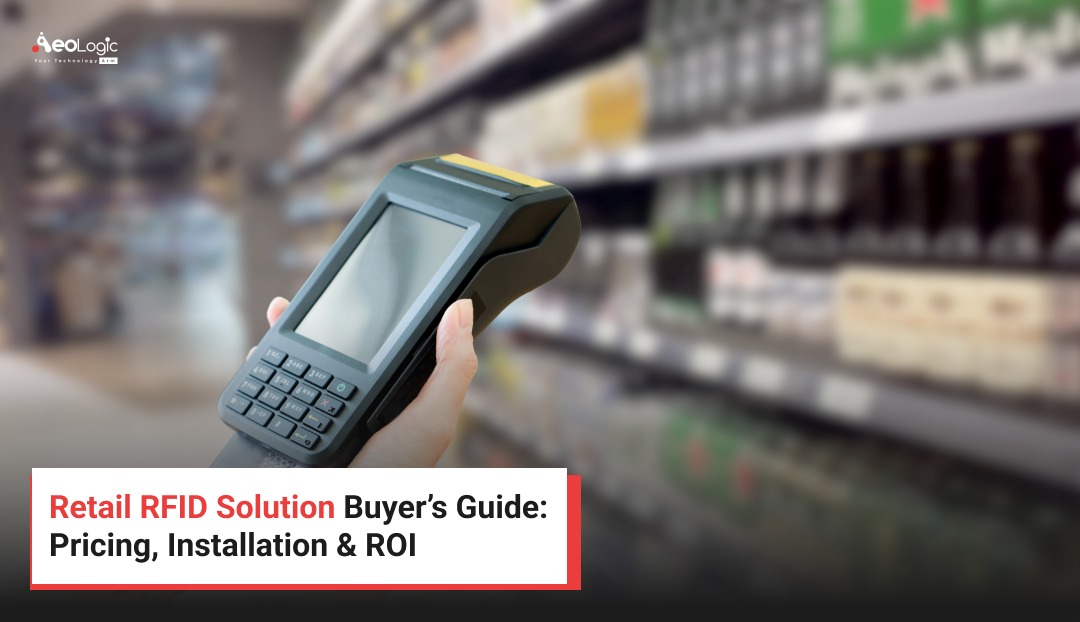

Retail is undergoing one of the most significant transformations in its history. From omnichannel shopping to real-time inventory visibility, retailers are under immense pressure to operate faster, smarter, and more efficiently. Traditional retail systems are no longer enough to meet modern consumer expectations. This is where a Retail RFID Solution becomes a game-changer.
Radio Frequency Identification (RFID) technology has quietly evolved from a niche supply chain tool into a core component of digital retail transformation. Today, leading retailers use RFID to gain accurate inventory data, reduce shrinkage, improve customer experiences, and generate measurable returns on investment. Yet, for many decision-makers, understanding pricing, installation requirements, and ROI remains challenging.
This comprehensive buyer’s guide is designed to help retailers, IT leaders, and digital transformation teams make informed decisions. Whether you are exploring RFID for the first time or planning to scale an existing system, this guide will walk you through everything you need to know—from fundamentals to future trends—while keeping real-world business outcomes in focus.
What a Retail RFID Solution Means
A Retail RFID Solution is a technology system that uses radio waves to automatically identify, track, and manage retail inventory in real time. Unlike barcodes, which require line-of-sight scanning, RFID tags can be read wirelessly and simultaneously, even when items are stacked, boxed, or moving. At its core, a retail RFID system consists of RFID tags attached to products, RFID readers placed strategically throughout the store or warehouse, and software platforms that process and analyze the collected data. Together, these components provide continuous visibility into inventory movement across the retail ecosystem.
What makes a Retail RFID Solution particularly powerful is its ability to bridge the physical and digital worlds. Every tagged item becomes a data point, enabling retailers to track inventory from the supplier to the sales floor and ultimately to the customer. This level of accuracy is nearly impossible to achieve with manual counting or barcode-based systems.
Importance of Retail RFID Solutions in Today’s World
Modern retail operates in an environment where speed, accuracy, and personalization define success. Consumers expect products to be available when and where they want them, whether online or in-store. A single inventory mismatch can lead to lost sales, dissatisfied customers, and brand erosion. Retail RFID solutions address these challenges by delivering near-perfect inventory accuracy, often exceeding 95 percent. This accuracy enables retailers to confidently offer services like buy-online-pickup-in-store, ship-from-store, and real-time product availability checks. Beyond customer expectations, operational efficiency has become critical due to rising labor costs and shrinking margins. Manual inventory counts are time-consuming, error-prone, and expensive. RFID automates these processes, freeing staff to focus on customer engagement rather than administrative tasks.
From a strategic perspective, RFID also supports broader digital transformation initiatives. Consulting firms like Aeologic Technologies, known for digital transformation consulting, often position RFID as a foundational layer that integrates with AI, analytics, ERP, and omnichannel platforms. This makes RFID not just a technology investment, but a long-term strategic enabler.
Key Benefits of a Retail RFID Solution
The benefits of implementing a Retail RFID Solution extend far beyond inventory tracking. When deployed correctly, RFID delivers measurable value across multiple business dimensions.
Improved Inventory Accuracy
This eliminates guesswork, reduces stock discrepancies, and ensures that the right products are available at the right time, both online and in-store.
Faster Inventory Counts and Labor Efficiency
RFID enables rapid cycle counts that take minutes instead of hours. Store teams can scan hundreds of items simultaneously without manual handling, significantly reducing labor costs and allowing staff to focus more on customer engagement and sales activities.
Enhanced Customer Experience
With accurate inventory data, store associates can quickly locate products, check availability, and fulfill omnichannel orders. This leads to faster service, fewer out-of-stock situations, and higher customer satisfaction.
Reduced Shrinkage and Loss Prevention
RFID helps track item movement across the store and supply chain. Retailers can identify loss patterns early, reduce theft, and improve accountability, leading to better asset protection.
Better Demand Forecasting and Replenishment
By providing real-time data, a Retail RFID Solution supports smarter demand planning and replenishment decisions. Retailers can optimize stock levels, reduce overstocking, and improve sell-through rates.
Scalable Foundation for Digital Transformation
RFID acts as a foundational technology that integrates seamlessly with ERP, POS, and analytics systems. It supports future innovations such as AI-driven insights, automation, and omnichannel retail strategies.
How Retail RFID Solutions Work in Practice
Step One: Item-Level RFID Tagging
Each product is equipped with an RFID tag that contains a unique identifier. This tag is linked to detailed product information in the retailer’s inventory or ERP system, creating a digital identity for every item.
Step Two: Strategic Placement of RFID Readers
RFID readers are installed at key locations such as receiving docks, stockrooms, store entrances, fitting rooms, and checkout areas. Handheld readers are also used by store staff for inventory counts and item searches.
Step Three: Automatic Data Capture
As tagged items move through the store or supply chain, RFID readers automatically capture data using radio waves. Multiple items can be scanned simultaneously without direct line-of-sight, making the process fast and highly accurate.
Step Four: Data Processing and System Integration
Captured data is sent to RFID software or middleware, where it is filtered and processed. The system integrates with POS, inventory management, and eCommerce platforms to ensure real-time visibility across all channels.
Step Five: Real-Time Inventory Insights
Retailers use dashboards and analytics tools to monitor stock levels, item movement, and exceptions. This enables accurate inventory counts, faster replenishment, and better decision-making.
Step Six: Operational and Customer Impact
Store associates use RFID insights to locate products quickly, fulfill online orders, and prevent losses. The result is improved efficiency, reduced costs, and a better customer experience powered by a Retail RFID Solution.
Pricing Considerations for Retail RFID Solutions
Pricing is one of the most common concerns when evaluating a Retail RFID Solution. While costs vary based on scale and complexity, understanding the main cost components helps retailers plan effectively.
Cost of RFID Tags
RFID tags are a recurring cost and vary based on volume, durability, and product type. Apparel tags are generally lower in cost, while hard tags for electronics or reusable assets are more expensive. Bulk purchasing often reduces per-unit pricing.
Hardware and Infrastructure Investment
This includes handheld readers, fixed readers, antennas, and networking equipment. Costs depend on store size, layout, and the number of read points required for accurate coverage.
Software and Integration Expenses
Retail RFID software may be licensed as a subscription or one-time purchase. Additional costs can arise from integrating RFID with existing POS, ERP, inventory, and eCommerce systems.
Installation and Support Services
Professional services such as site surveys, system configuration, staff training, and ongoing maintenance are essential. Investing in expert installation helps ensure reliable performance and faster ROI from the Retail RFID Solution.
Installation and Deployment Best Practices
| Best Practice Area | Description |
|---|---|
| Clear Business Objectives | Define specific goals such as improving inventory accuracy, reducing labor costs, or enabling omnichannel fulfillment. Clear objectives guide system design and success measurement. |
| Pilot Implementation | Start with a pilot in selected stores or product categories. This helps validate performance, identify gaps, and refine processes before full-scale rollout. |
| Store Layout Assessment | Conduct site surveys to determine optimal placement of RFID readers and antennas. Proper placement minimizes interference and maximizes read accuracy. |
| System Integration Planning | Ensure seamless integration with POS, ERP, inventory, and eCommerce platforms. Integrated systems allow real-time data flow and better operational decisions. |
| Staff Training and Change Management | Train store associates and IT teams on RFID usage and benefits. Strong adoption improves efficiency and ensures consistent system performance. |
| Ongoing Monitoring and Optimization | Continuously monitor system performance and fine-tune configurations. Regular optimization helps maintain accuracy and long-term ROI from the Retail RFID Solution. |
Measuring ROI from Retail RFID Solutions
Labor Cost Reduction
A Retail RFID Solution significantly reduces the time spent on manual inventory counts. Faster cycle counts and automated tracking lower labor hours, creating immediate and measurable cost savings.
Increased Sales and Revenue Uplift
Improved inventory accuracy ensures products are available when customers want them. Fewer stockouts and better on-shelf availability directly contribute to higher sales and improved conversion rates.
Shrinkage and Loss Reduction
RFID provides visibility into item movement, helping retailers identify theft, misplaced inventory, and process gaps. Reduced shrinkage leads to improved margins and asset protection.
Inventory Optimization
Real-time data enables better demand forecasting and replenishment planning. Retailers can reduce overstocking, minimize markdowns, and improve sell-through rates.
Challenges in Implementing a Retail RFID Solution and How to Overcome Them
While the advantages of a Retail RFID Solution are compelling, implementation is not without challenges. Understanding these obstacles in advance allows retailers to mitigate risks and maximize value.
High Implementation Costs vs. Phased Investment
Challenge: The initial cost of RFID tags, readers, and software can appear high.
Solution: Begin with a pilot or phased rollout focused on high-value or fast-moving items to demonstrate quick ROI and control costs.
Integration Complexity vs. Seamless Connectivity
Challenge: Connecting RFID systems with existing POS, ERP, and inventory platforms can be complex.
Solution: Use scalable RFID platforms and work with experienced integration partners to ensure smooth, future-ready system connectivity.
Employee Resistance vs. Effective Change Management
Challenge: Staff may resist adopting new technology due to unfamiliarity.
Solution: Provide practical training and highlight how RFID simplifies daily tasks, reduces manual work, and improves productivity.
Technical Interference vs. Optimized System Design
Challenge: Store layouts, metal fixtures, or liquids can impact read accuracy.
Solution: Conduct site surveys and select appropriate tags and reader placements to ensure reliable performance.
Data Security Risks vs. Robust Protection
Challenge: Increased data flow raises security concerns.
Solution: Implement strong data governance, encryption, and access controls to protect sensitive information.
Future Trends Shaping Retail RFID Solutions
The modern retail market is evolving rapidly, and Retail RFID Solutions are adapting to meet new demands driven by technology, consumer behavior, and operational efficiency. One major trend is the integration of RFID with artificial intelligence and advanced analytics. Retailers are using AI to analyze RFID-generated data for demand forecasting, automated replenishment, and real-time anomaly detection. Omnichannel enablement is another key trend. As customers expect seamless shopping across online and physical stores, RFID provides real-time inventory visibility that supports services such as buy-online-pickup-in-store, ship-from-store, and same-day delivery. Cloud-based RFID platforms are gaining popularity due to their scalability and lower infrastructure costs. These solutions allow retailers to deploy RFID faster, manage multiple locations centrally, and access insights in real time.
Sustainability is also shaping RFID adoption. Retailers are using RFID to reduce overproduction, minimize waste, and improve inventory turnover. Eco-friendly and recyclable RFID tags are becoming more common as sustainability becomes a competitive differentiator. As retail continues to modernize, RFID will remain a core technology enabling smarter, more responsive, and customer-centric operations.
Why Retailers Choose Aeologic Technologies for RFID and Digital Transformation
Successful RFID adoption requires more than just technology—it requires strategy, integration expertise, and long-term vision. This is where Aeologic Technologies stands out. By combining RFID expertise with AI, cloud, and enterprise system integration, Aeologic Technologies ensures that RFID becomes a core component of a retailer’s digital transformation journey rather than a standalone initiative. Retailers working with Aeologic benefit from customized solutions, industry best practices, and ongoing support that adapts as business needs evolve.
Conclusion
A Retail RFID Solution is no longer a luxury reserved for large enterprises. It has become a strategic necessity for retailers aiming to compete in a data-driven, omnichannel world. From improving inventory accuracy and reducing operational costs to enhancing customer experiences and enabling digital transformation, RFID delivers value across the retail value chain.
While pricing, installation, and change management require careful planning, the long-term benefits far outweigh the initial challenges. Retailers that approach RFID with a clear strategy, experienced partners, and a focus on ROI can unlock significant competitive advantages. As retail continues to evolve, RFID will remain a foundational technology supporting smarter operations and better customer engagement. Investing today positions retailers for sustainable growth tomorrow.
Frequently Asked Questions
Q1. What is a Retail RFID Solution and how is it different from barcodes?
A Retail RFID Solution uses radio waves to automatically identify and track items without requiring line-of-sight scanning. Unlike barcodes, RFID enables the simultaneous reading of multiple items, thereby improving speed and accuracy.
Q2. How much does a Retail RFID Solution typically cost?
Costs vary based on scale, tag type, hardware, software, and integration requirements. While initial investment can be significant, most retailers achieve positive ROI within one to two years.
Q3. How long does it take to implement RFID in retail stores?
Implementation timelines depend on project scope. Pilot deployments can take a few weeks, while full-scale rollouts across multiple locations may take several months.
Q4. Is RFID suitable for small and mid-sized retailers?
Yes. Scalable RFID solutions and cloud-based platforms make RFID accessible to retailers of all sizes, especially when implemented strategically.
Q5. How does RFID support omnichannel retail strategies?
RFID provides real-time inventory visibility across stores and warehouses, enabling accurate order fulfillment, click-and-collect services, and improved customer satisfaction.