
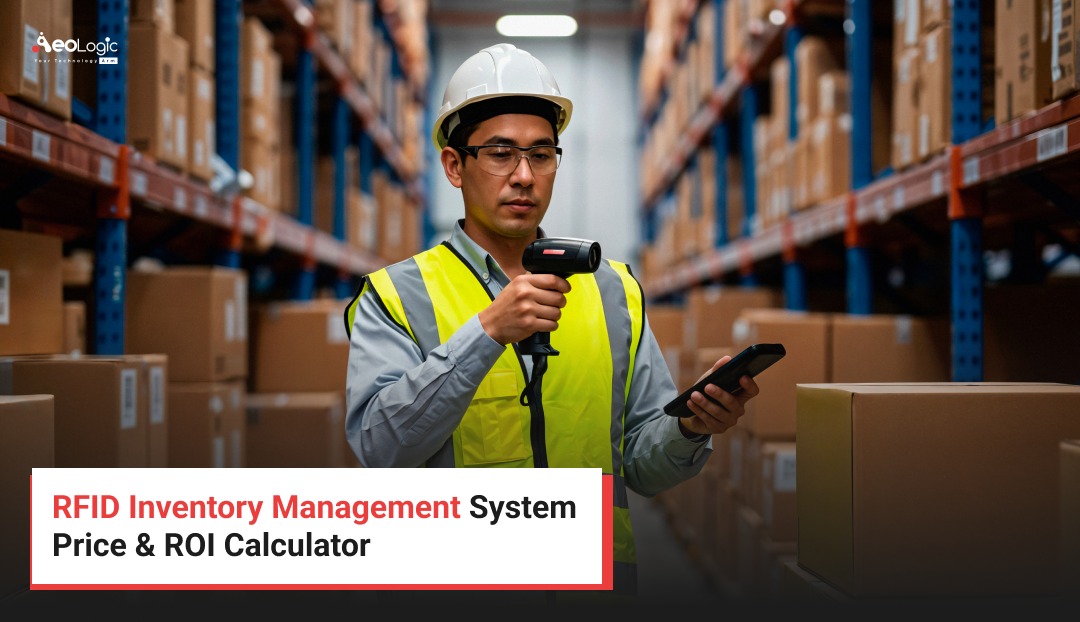

Inventory accuracy has become a defining factor for business success. Companies today operate in an environment where speed, visibility, and data accuracy directly impact customer satisfaction and profitability. However, traditional inventory management methods often rely on manual counts, barcode scanning, or disconnected systems that struggle to keep up with modern supply chain demands. As a result, errors, stockouts, and excess inventory remain common challenges. This is where RFID Inventory Management emerges as a powerful solution.
By enabling automated, real-time tracking of inventory, RFID systems transform how businesses monitor stock levels, movement, and availability. Moreover, when organizations evaluate RFID adoption, two critical questions always arise: how much does an RFID inventory management system cost, and what return on investment can businesses realistically expect?
This guide explores RFID system pricing and ROI calculation in detail. It explains costs, benefits, working models, challenges, and future trends, helping decision-makers assess whether RFID aligns with their operational and financial goals.
What RFID Inventory Management Means
RFID Inventory Management refers to the use of Radio Frequency Identification technology to track, manage, and control inventory automatically and in real time. Rather than relying on manual scanning or physical counts, RFID systems use radio waves to identify and track tagged items as they move through warehouses, stores, or production facilities.
An RFID-powered system typically includes RFID tags attached to items, RFID readers installed at key locations, antennas, middleware, and inventory management software. Together, these components capture inventory data continuously and update systems without human intervention. Therefore, businesses gain accurate visibility into inventory levels, locations, and movement patterns.
Unlike traditional inventory systems, this does not require line-of-sight scanning. Instead, it reads multiple items simultaneously, even when items are packed, stacked, or moving. Thus, it enables faster operations, higher accuracy, and more reliable inventory data across the entire supply chain. At its core, this inventory solution is not only about tracking products. Rather, it is about enabling smarter decisions, reducing operational waste, and supporting scalable, data-driven inventory strategies.
Importance of RFID Inventory Management in Today’s World
Modern businesses face increasing pressure to operate faster while maintaining accuracy and efficiency. Customers expect products to be available when and where they want them. However, inventory inaccuracies often lead to lost sales, delayed fulfillment, and increased operational costs. Hence, RFID Inventory Management has become increasingly important.
Firstly, global supply chains are more complex than ever. Inventory moves across multiple locations, partners, and channels. Manual tracking methods simply cannot provide real-time visibility at this scale. RFID technology solves this by delivering continuous, automated inventory updates across all touchpoints.
Moreover, omnichannel retail and just-in-time manufacturing depend heavily on accurate inventory data. Without reliable inventory visibility, businesses risk stock imbalances and poor customer experiences. RFID systems provide the accuracy required to support these modern business models.
Additionally, labor shortages and rising operational costs make automation essential. This technology reduces dependency on manual inventory counts, allowing teams to focus on higher-value activities. Therefore, organizations can improve efficiency while controlling costs.
Key Benefits of RFID Inventory Management
Real-Time Inventory Visibility
RFID Inventory Management provides instant insight into inventory levels and item locations. Consequently, businesses can respond quickly to demand changes and operational issues.
-
Live tracking of inventory across locations
-
Faster decision-making based on accurate data
-
Reduced delays and disruptions
Higher Inventory Accuracy
Manual inventory methods often lead to errors and inconsistencies. RFID significantly improves accuracy by automating data capture.
-
Near-perfect inventory accuracy
-
Reduced shrinkage and misplacement
-
Better demand forecasting
Operational Efficiency and Cost Reduction
Automation plays a major role in lowering operational costs. RFID Management solutions streamline workflows and minimizes manual labor.
-
Faster receiving and dispatch processes
-
Reduced labor costs for inventory counts
-
Improved space and resource utilization
Enhanced Customer Satisfaction
Accurate inventory ensures products are available when customers need them. Thus, businesses can fulfill orders reliably.
-
Fewer stockouts and backorders
-
Improved order fulfillment speed
-
Better customer trust and loyalty
Data-Driven Insights and Scalability
RFID systems generate valuable data that supports continuous improvement. Moreover, they scale easily as businesses grow.
-
Actionable insights from inventory trends
-
Easy expansion across new locations
-
Long-term ROI through adaptable systems
RFID Inventory Management System Pricing Explained
Understanding the price of an RFID-powered system requires examining several cost components. Pricing varies depending on business size, industry, and implementation scope.
Hardware Costs
Hardware costs include RFID tags, readers, antennas, and networking infrastructure. Tag prices vary based on durability, read range, and environment. For example, retail tags differ from rugged industrial tags. Therefore, hardware costs scale with inventory volume and usage conditions.
Software and Integration Costs
RFID software includes middleware, inventory management platforms, analytics dashboards, and system integrations. Customization and integration with ERP or WMS systems also influence pricing. Hence, software costs often represent a significant portion of the investment.
Deployment and Configuration Costs
Deployment involves site surveys, reader installation, calibration, and testing. Proper configuration ensures accurate reads and system reliability. Although these costs add upfront investment, they directly impact system performance and ROI.
Ongoing Operational Costs
Ongoing costs include system maintenance, support, software updates, and tag replenishment. However, these costs are typically offset by labor savings and operational efficiencies achieved through RFID technology.
Understanding ROI in RFID Inventory Management
Return on Investment (ROI) in an RFID Inventory Management system measures the financial value gained compared to the total cost of implementation. Moreover, RFID delivers both direct and indirect returns, making ROI calculation essential for informed decision-making.
| ROI Component | How RFID Inventory Management Impacts ROI |
|---|---|
| Inventory Accuracy | RFID improves inventory accuracy to near real-time levels. As a result, businesses reduce stock discrepancies, shrinkage, and costly write-offs. |
| Labor Cost Reduction | Automated scanning eliminates manual counting and data entry. Therefore, businesses save on labor hours and redeploy staff to higher-value tasks. |
| Reduced Stockouts | Real-time visibility ensures products are available when needed. Hence, lost sales and emergency replenishment costs decline significantly. |
| Lower Overstocking | Accurate demand data prevents excess inventory. Consequently, businesses free up working capital and reduce storage costs. |
| Faster Inventory Audits | RFID enables quick cycle counts instead of time-consuming physical audits. Thus, operations continue without disruption. |
| Improved Order Fulfillment | Faster picking and shipping reduce errors. As a result, customer satisfaction and repeat business increase. |
| Asset Loss Prevention | Continuous tracking minimizes theft and misplacement. Therefore, businesses experience lower asset replacement costs. |
| Scalability Benefits | RFID systems scale easily with business growth. Hence, long-term ROI improves as operations expand. |
Key ROI Takeaway
Although RFID Inventory Management requires an initial investment, the long-term financial gains often outweigh costs. Moreover, when businesses factor in improved efficiency, accuracy, and customer satisfaction, ROI becomes both measurable and sustainable.
How RFID Inventory Management Works in Business Operations
RFID Inventory Management enables businesses to track inventory automatically, accurately, and in real time. Moreover, its implementation varies across industries while following a common operational framework.
Retail and Omnichannel Commerce
Retailers use RFID to gain complete visibility across stores, warehouses, and online channels.
Implementation includes:
-
Tagging products at item or case level
-
Installing readers at receiving, shelves, and exits
-
Syncing real-time data with POS and inventory systems
-
Automating replenishment and omnichannel order fulfillment
Manufacturing and Production Facilities
Manufacturers rely on RFID to track raw materials, work-in-progress, and finished goods.
Implementation includes:
-
Tagging components and tools
-
Placing readers along production lines
-
Monitoring material movement and usage in real time
-
Integrating data with MES and ERP systems
WarehousinAutomated Inventory Solutionsg and Logistics
RFID streamlines inventory handling and shipment tracking in high-volume environments.
Implementation includes:
-
Tagging pallets, cartons, and containers
-
Installing dock door and zone-based readers
-
Automating receiving, picking, and shipping verification
-
Reducing manual scans and fulfillment errors
Healthcare and Pharmaceuticals
Healthcare organizations use RFID to improve accuracy, safety, and compliance.
Implementation includes:
-
Tagging medical supplies and equipment
-
Tracking inventory levels and expiration dates
-
Ensuring regulatory compliance and audit readiness
-
Preventing loss and improving asset utilization
Asset-Intensive Industries
Industries managing high-value assets use RFID for accountability and lifecycle tracking.
Implementation includes:
-
Tagging tools, equipment, and returnable assets
-
Monitoring location, usage, and maintenance schedules
-
Reducing loss and improving asset availability
Challenges in RFID Inventory Management and Practical Solutions
High Initial Investment
RFID systems require upfront investment in hardware and software. However, phased deployment and pilot programs help manage costs and demonstrate early ROI.
Environmental Interference
Metal, liquids, and dense environments can affect RFID performance. Therefore, businesses address this by selecting suitable tags and optimizing reader placement.
Data Overload
RFID generates large volumes of data. Hence, middleware filters and processes only actionable events to maintain system efficiency.
Change Management and Adoption
Employees may resist new systems. However, training, communication, and demonstrating clear benefits help drive adoption.
Actionable Insights for Businesses Considering RFID Inventory Management
Businesses planning to adopt RFID Inventory Management should begin with a clear strategy. Firstly, define specific goals such as improving inventory accuracy, reducing stockouts, or increasing fulfillment speed. Clear objectives help align technology with measurable outcomes.
Moreover, start with a focused, high-impact use case rather than a full-scale rollout. For example, implementing RFID in a high-loss or high-volume inventory area allows teams to validate value quickly and refine processes before scaling. Additionally, select RFID hardware suited to your operating environment. Warehouses, retail stores, and manufacturing floors require different tag types, read ranges, and durability levels. Choosing the right components ensures reliable performance from the start.
Integration planning is equally important. Ensure RFID data flows seamlessly into existing ERP, WMS, or POS systems to avoid data silos and manual workarounds. Therefore, prioritize solutions that support real-time synchronization and automation. Employee adoption also plays a critical role. Provide training and communicate benefits clearly to encourage acceptance and consistent usage. Hence, successful RFID Inventory solutions depend as much on people and processes as on technology.
Finally, design for scalability. Build an RFID framework that can grow with your business, support new locations, and adapt to future digital initiatives.
Future Trends in RFID Inventory Management
AI-Driven Inventory Intelligence
RFID Inventory Management is increasingly being combined with artificial intelligence and machine learning. Moreover, AI analyzes RFID data to predict demand, identify anomalies, and recommend inventory actions. As a result, businesses move from reactive stock control to proactive inventory planning.
Cloud-Based RFID Platforms
Cloud adoption is accelerating across inventory systems. Therefore, cloud-based RFID management solutions enable real-time visibility across multiple locations, faster deployments, and lower infrastructure costs. Additionally, cloud platforms simplify system updates and support rapid scalability.
Integration with IoT and Smart Sensors
RFID is evolving beyond identification into smart monitoring. By integrating RFID with IoT sensors, businesses can track temperature, humidity, and movement. Hence, industries like pharmaceuticals and food logistics gain greater control over product quality and compliance.
Sustainability-Focused RFID Solutions
Sustainability is shaping future RFID deployments. Reusable RFID tags, eco-friendly materials, and energy-efficient readers are becoming standard. Consequently, RFID management systems support both operational efficiency and environmental responsibility.
Edge Computing for Faster Decisions
Edge computing allows RFID data to be processed closer to where it is collected. Thus, businesses benefit from faster response times, reduced latency, and real-time automation without relying solely on centralized systems.
Seamless Omnichannel Inventory Visibility
Retailers are adopting RFID to unify online and offline inventory. Therefore, these solutions will play a key role in enabling accurate omnichannel fulfillment and superior customer experiences.
Conclusion
RFID Inventory Management has become a strategic asset for businesses seeking accuracy, efficiency, and scalability in inventory operations. By automating data capture and providing real-time visibility, RFID systems reduce costs, improve customer satisfaction, and support smarter decision-making.
When businesses evaluate system price alongside ROI, this often proves to be a high-value investment rather than a cost. With the right strategy, phased deployment, and performance measurement, organizations can unlock long-term operational and financial benefits.
Companies looking to align RFID initiatives with broader digital transformation consulting strategies can gain added value by working with experienced partners like Aeologic Technologies, who bring deep expertise in building scalable, ROI-driven digital solutions.
Frequently Asked Questions
Q1. What is RFID Inventory Management?
RFID-based inventory system uses RFID technology to automatically track and manage inventory in real time.
Q2. How much does an RFID Inventory Management system cost?
Costs vary based on hardware, software, deployment scope, and integration requirements.
Q3. How is ROI calculated for RFID Inventory Management?
ROI is calculated by comparing cost savings and revenue improvements against total system investment.
Q4. Which industries benefit most from RFID Inventory Management?
Retail, manufacturing, logistics, healthcare, and warehousing benefit significantly.
Q5 How long does it take to see ROI from RFID Inventory Management?
Most businesses see ROI within one to three years, depending on scale and usage.