
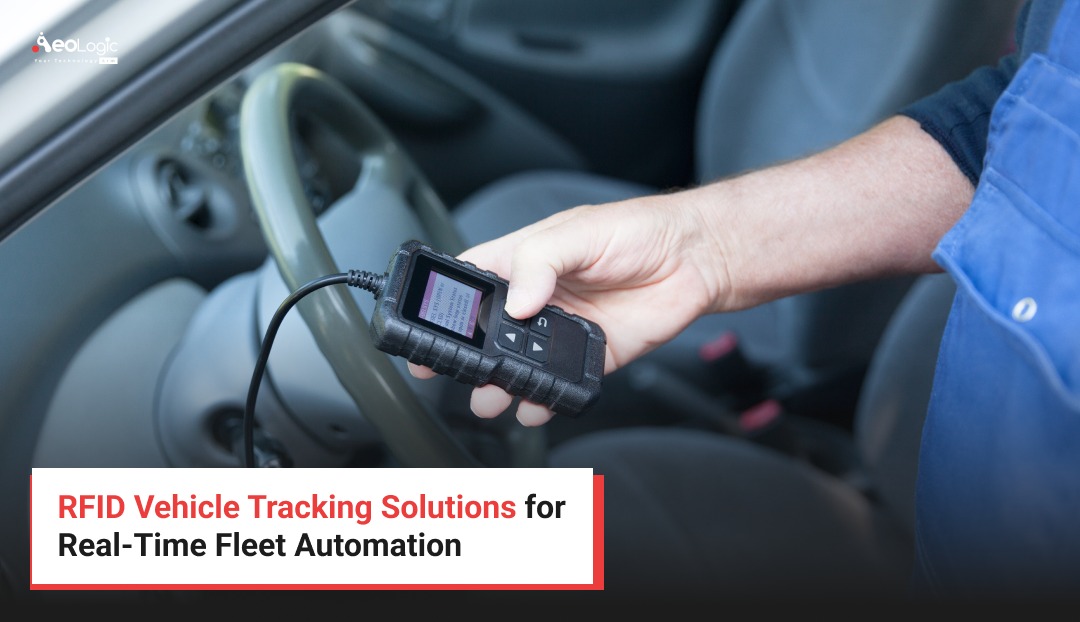

Fleet operations are no longer just about moving vehicles from point A to point B. In today’s data-driven and hyper-connected business environment, organizations demand visibility, speed, accuracy, and automation at every operational layer. This is where RFID vehicle tracking solutions step into the spotlight.
Companies managing logistics, transportation, construction, utilities, or delivery services face mounting pressure to reduce costs, improve compliance, and respond faster to operational challenges. Traditional GPS systems alone often fail to deliver the granular, real-time intelligence fleets now require. However, these solutions offer a smarter, more automated approach to fleet monitoring and control.
By combining radio frequency identification with intelligent software platforms, businesses gain the ability to automate identification, movement logging, and asset verification without human intervention. As a result, RFID vehicle tracking for fleets has become a foundational element of modern fleet automation strategies.
Moreover, as digital transformation accelerates across industries, organizations increasingly rely on automated fleet tracking solutions to achieve operational excellence, scalability, and transparency. This article explores how these systems work, why they matter, and how they are reshaping fleet operations worldwide.
What RFID Vehicle Tracking Solutions Mean
At its core, RFID vehicle tracking solutions use radio frequency signals to identify and track vehicles automatically. Each vehicle is equipped with an RFID tag, while strategically placed readers capture vehicle data as it moves through predefined checkpoints such as entry gates, warehouses, toll booths, or fueling stations.
Unlike manual logging or barcode scanning, RFID does not require line-of-sight. Therefore, vehicles can be identified instantly, even at high speeds or in low-visibility environments. This makes RFID vehicle tracking solutions exceptionally reliable for large-scale fleet environments.
For businesses, RFID vehicle tracking for fleets translates into real-time awareness of vehicle movement, status, and utilization. The data captured feeds directly into fleet management software, enabling automation, analytics, and reporting.
Furthermore, when integrated with enterprise systems, automated fleet tracking solutions streamline processes such as access control, maintenance scheduling, route optimization, and compliance monitoring. Hence, RFID becomes more than a tracking tool—it becomes an automation engine.
Importance of RFID Vehicle Tracking Solutions in Today’s World
Fleet operations are growing more complex due to globalization, rising fuel costs, labor shortages, and stricter regulations. In this context, RFID vehicle tracking solutions provide businesses with the clarity and control needed to stay competitive.
Firstly, real-time data eliminates blind spots. Fleet managers no longer rely on delayed reports or driver updates. Instead, RFID vehicle tracking for fleets ensures every movement is captured automatically and accurately.
Secondly, automation reduces human dependency. Manual check-ins, paper logs, and visual inspections slow operations and introduce errors. However, automated fleet tracking solutions enable touchless identification and instant verification, improving speed and accuracy.
Moreover, security concerns are growing. Unauthorized vehicle access, cargo theft, and route deviations cost businesses millions annually. By implementing RFID vehicle tracking solutions, companies establish secure access controls and digital audit trails.
Additionally, sustainability goals are pushing organizations to optimize fuel usage and reduce emissions. With better utilization data from RFID vehicle tracking for fleets, companies can eliminate idle time and inefficient routes.
Therefore, in today’s fast-paced operational landscape, RFID vehicle tracking solutions are no longer optional—they are essential.
Key Benefits of RFID Vehicle Tracking Solutions
The adoption of RFID vehicle tracking solutions delivers measurable benefits across operational, financial, and strategic dimensions.
Improved Operational Efficiency
By automating vehicle identification, RFID vehicle tracking for fleets removes bottlenecks at checkpoints, gates, and depots. Vehicles move faster, downtime drops, and throughput increases.
Enhanced Data Accuracy
Manual data entry leads to errors. In contrast, RFID vehicle tracking solutions capture precise, real-time data automatically. This ensures reliable reporting and analytics.
Stronger Security and Compliance
With automated fleet tracking solutions, only authorized vehicles gain access to restricted zones. Every movement is logged, creating a tamper-proof audit trail that supports compliance requirements.
Reduced Operational Costs
Fuel misuse, unauthorized trips, and inefficient routes drain resources. By leveraging RFID vehicle tracking for fleets, organizations gain visibility that directly translates into cost savings.
Scalable Fleet Management
As fleets grow, complexity increases. RFID vehicle tracking solutions scale seamlessly, supporting thousands of vehicles without additional manual overhead.
How RFID Vehicle Tracking Solutions Work in Real Operations
Understanding how RFID vehicle tracking solutions function in real-world environments highlights their value even further.
Each vehicle is equipped with a passive or active RFID tag containing a unique identifier. RFID readers are installed at strategic locations such as entrances, exits, weighbridges, parking areas, or service points. As vehicles pass these points, readers automatically capture the tag data.
The system then transmits this information to a centralized platform. Here, RFID vehicle tracking for fleets integrates with fleet management, ERP, or logistics software. Managers gain real-time dashboards, alerts, and reports.
Moreover, automated fleet tracking solutions can trigger predefined actions. For example, a vehicle entering a depot may automatically log arrival time, update inventory systems, or schedule maintenance checks.
Additionally, integration with GPS, IoT sensors, and AI analytics enhances the power of RFID vehicle tracking solutions, turning raw data into actionable insights.
Real-World Use Cases of RFID Vehicle Tracking for Fleets
RFID vehicle tracking solutions are widely adopted across industries to automate fleet operations, enhance visibility, and reduce manual effort. Below are key industry-specific use cases showing how this delivers measurable value in real-world environments.
Logistics and Transportation
-
Automated gate entry and exit logging at warehouses and distribution centers
-
Faster vehicle turnaround times with touchless identification
-
Improved route compliance and shipment accountability
-
Reduced congestion at loading docks and freight terminals
Construction and Infrastructure
-
Tracking heavy equipment movement across multiple project sites
-
Preventing unauthorized vehicle usage and asset theft
-
Monitoring equipment utilization to reduce idle time
-
Automating access control at construction zones
Manufacturing and Industrial Operations
-
Managing internal vehicle flow between production units
-
Synchronizing material transport with production schedules
-
Enhancing security at restricted manufacturing areas
-
Improving yard management and dock efficiency
Public Transportation and Municipal Fleets
-
RFID Monitoring bus and service vehicle movement in real time
-
Automating depot entry and exit records
-
Improving schedule adherence and fleet availability
-
Supporting regulatory compliance and audit readiness
Utilities, Oil, and Gas
-
Controlling vehicle access to sensitive facilities
-
Tracking service fleets across remote locations
-
Enhancing safety and compliance monitoring
-
Automating maintenance and inspection workflows
Across these industries, automated fleet tracking solutions powered by RFID enable real-time visibility, operational efficiency, and scalable fleet automation—making them a critical component of modern fleet management strategies.
Challenges in Implementing RFID Vehicle Tracking Solutions
Implementing RFID vehicle tracking solutions delivers significant value, however organizations often face practical challenges during deployment. Understanding these barriers helps ensure a smoother implementation and better long-term results.
High Initial Investment
The upfront cost of RFID tags, readers, infrastructure, and software can seem high, especially for large fleets. However, long-term operational savings often offset this investment.
Infrastructure and Environmental Constraints
Metal surfaces, weather conditions, and physical obstacles can interfere with RFID signals. Proper system design and industrial-grade hardware are essential to maintain tracking accuracy.
System Integration Complexity
Integrating RFID vehicle tracking solutions with existing fleet management, ERP, or logistics systems can be complex. Lack of interoperability may delay implementation if not planned carefully.
Data Accuracy and Tag Placement
Incorrect tag placement or low-quality tags may lead to missed reads or duplicate data. Testing and standardization are critical for consistent performance.
Workforce Adoption and Training
Employees may resist new technologies or struggle to interpret RFID data. Without proper training, the full potential of automated fleet tracking remains underutilized.
Scalability and Future Readiness
Systems that are not designed for growth may struggle as fleets expand. Selecting scalable RFID vehicle tracking solutions is essential for long-term success.
By addressing these challenges early, organizations can unlock the full benefits of RFID-enabled fleet automation.
Solutions and Best Practices
| Challenge Area | Solutions & Best Practices |
|---|---|
| System Planning | Conduct a pilot deployment to test RFID vehicle tracking for fleets in real operational conditions before full rollout. |
| Hardware Selection | Use industrial-grade RFID tags and readers designed for harsh outdoor and high-traffic fleet environments. |
| Infrastructure Setup | Position RFID readers strategically at entry, exit, fueling, and service points to ensure accurate vehicle detection. |
| Data Integration | Integrate RFID vehicle tracking for fleets with fleet management, ERP, and GPS platforms using APIs for seamless data flow. |
| Automation Rules | Configure automated fleet tracking solutions to trigger actions such as access approval, alerts, and maintenance updates. |
| Interference Management | Apply proper tag placement and frequency tuning to minimize signal interference from metal and weather conditions. |
| Security Controls | Implement role-based access and encrypted data transmission to protect sensitive fleet information. |
| Scalability Planning | Choose cloud-based automated fleet tracking solutions that support fleet expansion without system redesign. |
| Staff Training | Train fleet operators and administrators to interpret RFID data and optimize operational decisions. |
| Continuous Optimization | Regularly analyze tracking data to improve routes, reduce idle time, and enhance overall fleet efficiency. |
By following these best practices, organizations can maximize the reliability, scalability, and long-term ROI of RFID-powered fleet tracking systems.
Future Trends in RFID Vehicle Tracking Solutions
As fleet operations continue to evolve, RFID vehicle tracking solutions are advancing rapidly to support smarter, more connected, and fully automated fleet ecosystems. Below are the key trends shaping the future of RFID-enabled fleet management.
AI-Driven Fleet Intelligence
Artificial intelligence will enhance RFID data analysis by identifying patterns, predicting maintenance needs, and optimizing fleet utilization. This shift will transform RFID vehicle tracking solutions from monitoring tools into decision-making systems.
Integration with IoT and Smart Sensors
RFID will increasingly integrate with IoT sensors to capture data on fuel usage, temperature, load weight, and vehicle health. This convergence will enable comprehensive, real-time fleet visibility.
Cloud-Based and SaaS Platforms
Cloud-enabled RFID vehicle tracking solutions will support remote access, centralized control, and rapid scalability. Fleet managers will monitor operations across locations using unified dashboards.
Blockchain-Enabled Data Security
Blockchain technology will enhance data integrity by creating tamper-proof vehicle movement records. This will be especially valuable for compliance-driven and high-security fleet operations.
Autonomous and Semi-Autonomous Fleet Support
As autonomous vehicles grow, RFID will play a critical role in identification, access control, and vehicle-to-infrastructure communication within automated fleet environments.
Sustainability-Focused Fleet Optimization
Future RFID systems will support sustainability goals by reducing idle time, improving route efficiency, and lowering carbon emissions through data-driven insights.
Together, these trends indicate that RFID vehicle tracking solutions will become smarter, more secure, and deeply embedded in the future of automated fleet management.
Conclusion
The evolution of fleet management demands smarter, faster, and more automated systems. RFID vehicle tracking solutions deliver exactly that by enabling real-time visibility, operational automation, and data-driven decision-making.
From logistics and construction to public transport and manufacturing, RFID vehicle tracking for fleets empowers organizations to optimize performance, reduce costs, and enhance security.
As automated fleet tracking solutions continue to advance, businesses that embrace this technology gain a decisive competitive advantage. Partnering with experienced digital transformation leaders like Aeologic Technologies ensures successful implementation and long-term value.
Frequently Asked Questions
Q1. What industries benefit most from RFID vehicle tracking solutions?
Industries such as logistics, construction, manufacturing, utilities, and public transportation gain significant value from RFID vehicle tracking solutions.
Q2. How accurate is RFID vehicle tracking for fleets?
When properly implemented, RFID vehicle tracking for fleets delivers highly accurate, real-time identification with minimal error rates.
Q3. Are automated fleet tracking solutions scalable?
Yes, automated fleet tracking solutions are designed to scale across large and complex fleet environments.
Q4. Can RFID systems integrate with existing fleet software?
Modern RFID vehicle tracking solutions integrate seamlessly with ERP, GPS, and fleet management platforms.
Q5. Is RFID suitable for outdoor fleet tracking?
Absolutely. Industrial-grade RFID vehicle tracking for fleets systems perform reliably in outdoor and harsh environments.