
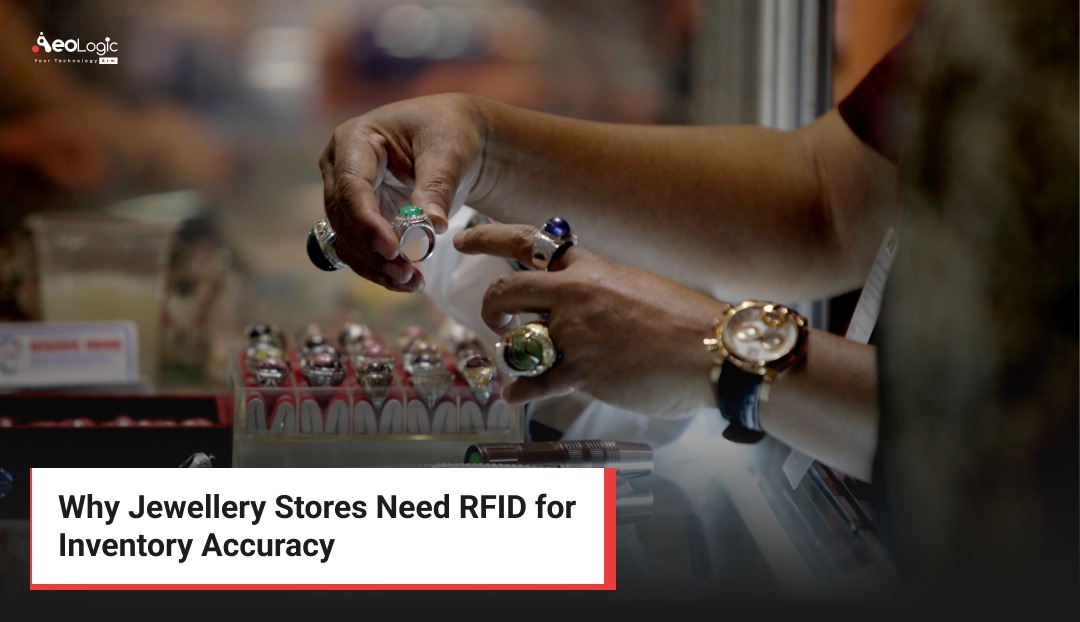

Jewellery retail is unlike any other form of commerce. Every item is small in size yet high in value, emotionally significant, and often irreplaceable. In such an environment, even minor inventory errors can lead to serious financial losses, customer dissatisfaction, and compliance issues. This is precisely why RFID jewellery inventory accuracy has become a critical priority for modern jewellery stores.
Traditional inventory methods were never designed to handle the complexity, volume, and precision required in jewellery retail. On the other hand, manual stock counts, barcode systems, and spreadsheet-based tracking struggle to deliver real-time visibility or eliminate human error. However, customer expectations have changed. Lastly, today’s buyers expect transparency, instant availability confirmation, and seamless omnichannel experiences. Therefore, jewellery businesses must adopt smarter systems that ensure precision at every level.
Additionally, this is where an RFID jewellery store inventory system emerges as a transformative solution. By enabling automated tracking, real-time stock visibility, and enhanced security, RFID empowers jewellery retailers to operate with confidence and control. Moreover, RFID technology in jewellery retail is no longer a future concept; it is rapidly becoming a competitive necessity.
Understanding the Context of RFID jewellery inventory accuracy
Radio Frequency Identification, commonly known as RFID, is a technology that uses radio waves to identify and track tagged objects automatically. In jewellery stores, RFID tags are attached to individual items or packaging, each containing a unique digital identity. Moreover, these tags communicate with RFID readers without requiring direct line-of-sight, which significantly differentiates them from barcodes.
Moreover, in the context of jewellery retail, RFID jewellery inventory accuracy refers to the ability to maintain precise, real-time records of every jewellery item’s location, status, and movement across the store, warehouse, and sales channels. Unlike manual systems that rely on periodic counts, RFID continuously updates inventory data.
An RFID jewellery store inventory system integrates RFID tags, readers, antennas, and backend software to create a unified view of inventory. This system not only tracks stock but also synchronizes data across point-of-sale systems, ERP platforms, and eCommerce channels. As a result, RFID technology in jewellery retail enables retailers to operate with unprecedented accuracy and transparency.
Why RFID jewellery inventory accuracy matters
Inventory accuracy has always been important in jewellery retail, but today it is mission-critical. Market dynamics, customer expectations, and operational complexity have raised the stakes. Inaccurate inventory can lead to missed sales, excess capital lock-up, and reputational damage.
Firstly, omnichannel retailing has become the norm. Customers browse online, reserve items digitally, and expect seamless in-store fulfillment. Without RFID jewellery inventory accuracy, stores risk selling items that are unavailable or failing to capitalize on stock they already have.
Secondly, compliance and audit requirements have become stricter. Jewellery businesses must maintain precise records for insurance, taxation, and regulatory reporting. Manual discrepancies can trigger costly audits and legal complications.
Furthermore, shrinkage remains a persistent challenge. Jewellery items are highly vulnerable to theft, misplacement, and administrative errors. An RFID jewellery store inventory system addresses this by providing real-time alerts, movement tracking, and detailed audit trails.
Hence, as competition intensifies, RFID technology in jewellery retail offers a strategic advantage by ensuring accuracy, efficiency, and trust at scale.
Key Benefits of Adopting RFID in Jewellery Stores
Improved RFID jewellery inventory accuracy
RFID eliminates manual counting errors by automatically tracking every item. With real-time updates, RFID jewellery inventory accuracy remains consistently high across displays, storage, and sales channels.
Faster and Effortless Stock Audits
Jewellery stores can complete full inventory audits in minutes instead of hours. RFID enables quick scanning without handling each item, saving time and reducing operational disruption.
Reduced Shrinkage and Better Security
RFID improves loss prevention by monitoring item movement and triggering alerts for unauthorized removal. This significantly lowers theft, misplacement, and internal shrinkage.
Real-Time Stock Visibility
Store teams always know what is available, sold, or in transit. Accurate visibility supports confident selling, better replenishment decisions, and improved customer trust.
Enhanced Staff Productivity
By automating inventory tasks, employees spend less time counting stock and more time assisting customers, leading to higher sales and better in-store experiences.
Support for Omnichannel Retailing
RFID ensures reliable inventory data across online and offline channels, enabling services like click-and-collect and ship-from-store without inventory mismatches.
Data-Driven Decision Making
RFID provides actionable insights into product movement and performance, helping jewellery retailers optimize displays, reduce dead stock, and improve profitability.
How Jewellery Businesses Use RFID in Real-World Operations
Item-Level Tagging at Entry Point
Firstly, each jewellery item is tagged with a unique RFID identifier during manufacturing or stock intake. This ensures every piece is digitally recorded from the moment it enters the store, improving traceability and accountability.
-
Unique ID assigned to each item
-
Secure and discreet tag placement
-
Instant registration into inventory system
Real-Time Inventory Tracking
Next, RFID readers continuously capture item movements across showcases, storage, and sales areas. As a result, inventory records update automatically without manual intervention.
-
Live visibility of stock location
-
Accurate in-store and backroom tracking
-
Reduced dependency on manual checks
Fast and Non-Disruptive Stock Audits
Moreover, jewellery stores perform frequent audits without closing operations. Entire sections can be scanned within minutes, ensuring accuracy without handling each item.
-
Quick cycle counts
-
Minimal business disruption
-
Consistent inventory accuracy
Omnichannel Order Fulfillment
Meanwhile, RFID enables reliable stock data for online and offline channels. Therefore, stores can confidently offer click-and-collect and ship-from-store services.
-
Accurate online availability
-
Faster order fulfillment
-
Fewer canceled orders
Enhanced Security and Loss Prevention
Additionally, RFID tracks unauthorized movements and triggers alerts. Hence, theft and misplacement risks are significantly reduced.
-
Real-time movement alerts
-
Improved internal control
-
Lower shrinkage rates
Data-Driven Merchandising Decisions
Finally, RFID data supports smarter product placement and replenishment strategies.
-
Identify fast-moving items
-
Optimize display layouts
-
Improve overall sales performance
Challenges in RFID Adoption
High Initial Implementation Cost
One of the most common challenges in RFID adoption is the upfront investment. Jewellery retailers must invest in RFID tags, readers, antennas, and software systems. However, while the long-term return is strong, smaller businesses may hesitate due to budget constraints at the initial stage.
Metal Interference and Signal Accuracy
Jewellery items are primarily made of precious metals, which can interfere with radio frequency signals. Moreover, without specialized RFID tags and proper reader placement, read accuracy may suffer. This makes technology selection and system calibration critical.
Employee Resistance and Training Needs
Firstly, transitioning from manual inventory methods to RFID-based systems requires a mindset shift. Staff members may resist change or struggle with new processes if adequate training is not provided. Ongoing education and hands-on support are essential for smooth adoption.
Integration of RFID jewellery inventory accuracy
Integrating RFID with current POS, ERP, or inventory management platforms can be complex. Moreover, poor integration may result in data mismatches, delayed updates, or limited system visibility, reducing overall effectiveness.
Tag Management and Data Consistency
Incorrect tag placement, damaged tags, or inconsistent scanning procedures can affect data reliability. Jewellery stores must establish standardized tagging processes and perform regular audits to maintain consistent inventory accuracy.
Ongoing Maintenance and Optimization
In addition, RFID systems require continuous monitoring, updates, and optimization. Without routine performance checks, system efficiency may decline over time, impacting long-term results and inventory reliability.
The Future of RFID jewellery inventory accuracy
AI-Driven Inventory Intelligence
.
RFID data will increasingly integrate with artificial intelligence to deliver predictive insights. Jewellery retailers will forecast demand more accurately, optimize stock levels, and reduce overstock and stockouts through intelligent analysis. Additionally, AI-driven insights will enable jewellery retailers to identify slow-moving designs early and adjust pricing or promotions before inventory becomes stagnant. This proactive approach reduces dead stock and improves cash flow management. With deeper analytics, decision-makers can also evaluate regional demand patterns, seasonal trends, and customer preferences with greater confidence.
Real-Time, End-to-End Visibility
Future RFID systems will provide complete visibility across supply chains, from manufacturing to point of sale. This continuous tracking will further strengthen RFID jewellery inventory accuracy and improve coordination across locations. Furthermore, end-to-end RFID visibility will strengthen collaboration between manufacturers, distributors, and retail outlets. Accurate, shared inventory data will minimize delays, prevent duplicate orders, and support just-in-time replenishment strategies. This level of transparency will be especially valuable for multi-location jewellery brands managing complex assortments.
Smarter Security and Loss Prevention
Advanced RFID solutions will integrate with video analytics and access control systems. As a result, jewellery stores will detect suspicious activity faster and minimize shrinkage more effectively. Security enhancements will also extend beyond theft prevention. RFID-integrated systems will support detailed audit trails, simplifying insurance claims, compliance reporting, and regulatory audits. Retailers will gain better control over high-value assets while maintaining operational efficiency.
Enhanced Customer Experiences
RFID will support personalized in-store experiences by enabling smart displays and clienteling tools. Staff will instantly access product details and availability, improving service quality and customer satisfaction. On the customer experience front, RFID-enabled personalization will help sales associates provide faster assistance and tailored recommendations. Shoppers will enjoy smoother journeys, from browsing to checkout, increasing loyalty and repeat visits.
Seamless Omnichannel Integration
RFID will act as the backbone for omnichannel operations, ensuring accurate inventory data across online and offline channels. This will enable faster fulfillment and more reliable order promises. As omnichannel retail continues to evolve, RFID-backed accuracy will reduce order cancellations and returns caused by inventory mismatches. Ultimately, scalable and cost-effective RFID solutions will allow jewellery businesses of all sizes to compete with confidence, innovate faster, and build resilient operations for long-term growth.
Scalable and Cost-Effective Solutions
As RFID technology matures, costs will decrease and adoption will become more accessible. Even small and mid-sized jewellery stores will benefit from improved inventory accuracy and operational efficiency.
Strategic Takeaways with RFID jewellery inventory accuracy
Jewellery retailers evaluating RFID should approach it as a strategic investment rather than a tactical upgrade. Success depends on aligning technology with business goals, customer expectations, and long-term growth plans.
Additionally, a phased rollout is often most effective. Starting with high-value SKUs or flagship stores allows businesses to validate results before scaling. Over time, the RFID jewellery store inventory system becomes the single source of truth for inventory data.
Additionally, retailers should establish clear performance metrics before implementation to measure improvements in audit time, shrinkage reduction, and stock availability. This data-driven approach helps justify investment decisions and ensures continuous improvement. Moreover, internal processes should be standardized alongside RFID deployment so that inventory practices remain consistent across locations. Regular staff training and system audits further strengthen adoption and long-term value. When supported by leadership commitment and operational discipline, RFID jewellery inventory accuracy not only improves daily inventory control but also enhances customer trust, enables omnichannel growth, and supports scalable expansion in an increasingly competitive jewellery retail landscape.
Therefore, equally important is choosing the right technology partner. Expertise in RFID technology in jewellery retail ensures proper tag selection, system integration, and ongoing optimization. With the right foundation, RFID jewellery inventory accuracy becomes a competitive differentiator.
Conclusion
In today’s high-value, high-expectation jewellery market, accuracy is not optional; it is essential. Manual processes and legacy systems can no longer keep pace with the demands of modern retail. RFID jewellery inventory accuracy empowers jewellery stores to operate with confidence, transparency, and control.
However, by implementing an RFID jewellery store inventory system, retailers gain real-time visibility, enhanced security, and operational efficiency. Meanwhile, RFID technology in jewellery retail unlocks new opportunities for omnichannel growth, customer engagement, and data-driven decision-making.
Hence, as jewellery businesses look toward the future, RFID stands out as a foundational technology that supports scalability and resilience. Companies like Aeologic Technologies, with deep expertise in digital transformation consulting, help jewellery retailers design and deploy RFID solutions that deliver measurable, long-term value.
Frequently Asked Questions (FAQs)
Q1. What is RFID jewellery inventory accuracy?
RFID jewellery inventory accuracy refers to maintaining precise, real-time visibility of all jewellery items using RFID tags and automated tracking systems.
Q2. How does an RFID jewellery store inventory system reduce shrinkage?
It tracks item movement in real time and triggers alerts when items leave authorized zones, helping prevent theft and loss.
Q3. Is RFID technology in jewellery retail safe for precious metals?
Yes, modern RFID solutions are specifically designed to work effectively with metal-based jewellery items.
Q4. How long does it take to see ROI from RFID implementation?
Most jewellery retailers experience ROI within months due to reduced losses, labor savings, and improved sales accuracy.
Q5. Can small jewellery stores use RFID?
Absolutely. RFID solutions are scalable and can be tailored to stores of all sizes.