
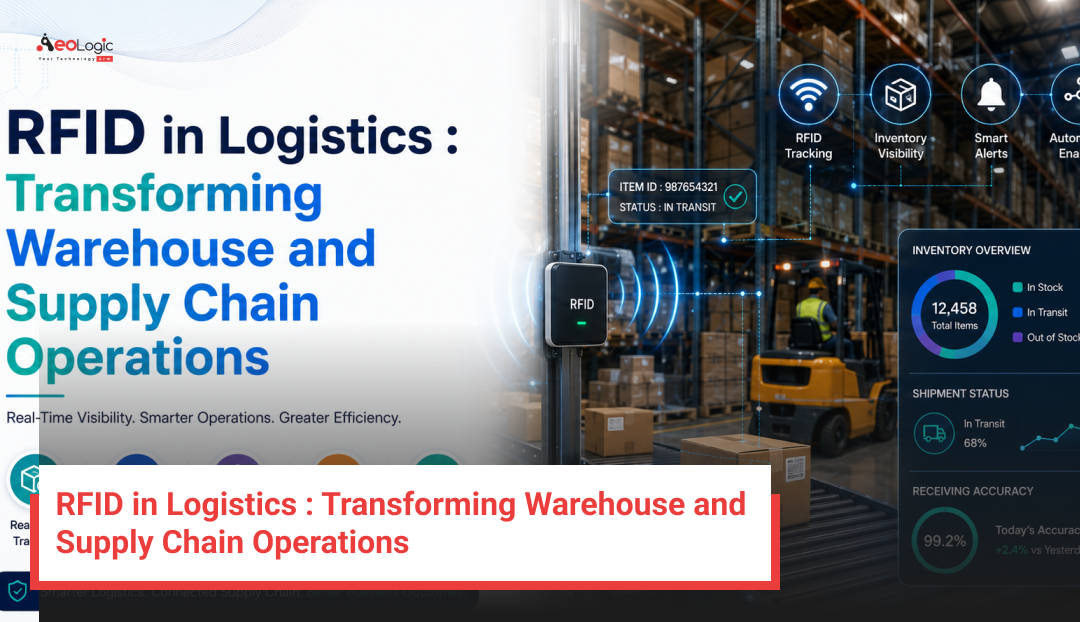

The logistics industry has experienced significant transformation over the last decade due to rapid technological advancements, increasing customer expectations, and the growing complexity of global supply chains. Businesses today are under constant pressure to deliver products faster, maintain inventory accuracy, reduce operational costs, and improve transparency throughout the supply chain network. Traditional logistics methods based on manual tracking systems and barcode technologies often struggle to meet these demands efficiently. As organizations seek smarter solutions, RFID technology has emerged as one of the most impactful innovations revolutionizing warehouse management and supply chain operations. The adoption of RFID in logistics and supply chain processes is enabling businesses to achieve real-time visibility, automation, and improved operational efficiency across multiple stages of product movement.
Radio Frequency Identification, commonly known as RFID, is transforming the way organizations manage inventory, track shipments, monitor assets, and optimize warehouse workflows. Unlike conventional barcode systems that require direct scanning, RFID uses radio waves to automatically identify and track tagged objects. This capability allows logistics companies to capture data without manual intervention, reducing errors while accelerating operational processes. As industries continue embracing digital transformation, the importance of implementing RFID in logistics and supply chain management is growing rapidly.
Understanding RFID Technology in Logistics
RFID is a wireless communication technology designed to identify and monitor objects through electromagnetic fields. A standard RFID system typically consists of RFID tags, RFID readers, and backend software systems that process collected data. RFID tags contain electronically stored information attached to products, pallets, containers, or assets. Readers communicate with these tags and transfer data to centralized management platforms for monitoring and analysis.
One of the biggest advantages of RFID lies in its ability to perform automated identification without requiring a direct line of sight. Traditional barcode systems require workers to manually scan each item individually, which consumes time and increases the possibility of errors. RFID systems, however, can scan multiple tagged items simultaneously, making them highly effective in large-scale warehouse and logistics environments. This efficiency explains why organizations increasingly invest in RFID in logistics and supply chain operations to streamline inventory tracking and improve visibility.
RFID technology generally falls into three categories including passive RFID, active RFID, and semi-passive RFID systems. Passive RFID tags do not possess an internal power source and rely on reader-generated energy. These tags are cost-effective and commonly used in inventory management. Active RFID tags include built-in batteries and continuously transmit signals over longer distances, making them suitable for tracking vehicles and high-value assets. Semi-passive tags combine features of both technologies and often support environmental monitoring functions.
Why Traditional Logistics Systems Need Modernization
Conventional logistics processes have historically depended on spreadsheets, manual records, and barcode scanning methods. While these systems provided foundational tracking capabilities, modern supply chains require far greater speed, accuracy, and transparency. Growing e-commerce demand and global trade expansion have increased operational complexity, exposing limitations in traditional systems.
Manual inventory counting frequently results in stock inaccuracies, delayed updates, and inefficient warehouse operations. Misplaced products and shipment errors contribute to higher costs and customer dissatisfaction. Businesses also struggle to maintain end-to-end visibility throughout transportation and storage stages. Without real-time tracking information, responding quickly to disruptions becomes challenging.
Implementing RFID in logistics and supply chain environments addresses these issues by automating identification processes and providing continuous visibility into inventory movement. Organizations gain the ability to monitor products in real time, reducing uncertainty and improving operational responsiveness.
Role of RFID in Warehouse Management
Warehouses represent the operational backbone of supply chains. Efficient warehouse management directly impacts inventory accuracy, fulfillment speed, and customer satisfaction. RFID technology is significantly improving warehouse performance through automation and real-time tracking capabilities.
Inventory management traditionally requires workers to scan products manually or conduct periodic stock counts. These processes consume labor hours and often produce inaccuracies. RFID systems automatically record inventory movement whenever tagged products enter or leave designated locations. This functionality enables continuous inventory monitoring and minimizes discrepancies.
Real-time visibility is one of the most valuable benefits of RFID-enabled warehouses. Managers gain immediate access to inventory levels, helping prevent stockouts and overstocking situations. Improved accuracy supports better purchasing decisions and demand forecasting.
Order fulfillment processes also become faster with RFID implementation. Workers can identify product locations quickly, reducing picking errors and improving shipment accuracy. Faster fulfillment contributes to improved customer experiences and operational efficiency. The increasing deployment of RFID in logistics and supply chain management demonstrates its effectiveness in modern warehouse environments.
Enhancing Supply Chain Visibility Through RFID
Supply chain visibility has become a critical requirement for organizations operating across multiple regions and distribution networks. Businesses need transparency regarding product status, shipment location, and inventory availability throughout the supply chain lifecycle.
RFID technology provides continuous monitoring capabilities by automatically updating product information at various checkpoints. Manufacturers, distributors, warehouse operators, and retailers gain access to synchronized data regarding product movement.
Improved visibility supports proactive decision-making. When delays occur during transportation, organizations can respond immediately rather than discovering issues after customer complaints arise. Real-time insights improve operational planning while strengthening coordination between stakeholders.
The growing emphasis on transparency has accelerated adoption of RFID in logistics and supply chain systems among industries seeking resilient and efficient operations.
RFID Applications Across Logistics Operations
The applications of RFID extend beyond inventory tracking and influence multiple logistics functions. Asset tracking represents one important use case. Logistics companies manage expensive equipment such as containers, forklifts, pallets, and transportation assets. RFID systems monitor utilization while reducing losses caused by theft or misplacement.
Shipment tracking has also improved significantly through RFID implementation. Businesses can monitor product movement throughout transportation routes and provide customers with accurate delivery updates. Enhanced transparency increases customer confidence while supporting service quality improvements.
Cold chain logistics is another major application area. Industries handling pharmaceuticals and perishable foods require strict environmental monitoring. RFID sensors track temperature and humidity conditions, helping maintain compliance and product quality.
The versatility of RFID in logistics and supply chain management continues driving adoption across manufacturing, healthcare, retail, and transportation sectors.
Benefits of RFID in Logistics and Supply Chain Operations
Organizations implementing RFID solutions often experience measurable improvements across operational performance indicators. One major benefit is enhanced efficiency. Automation reduces repetitive manual activities and accelerates inventory processes.
Improved accuracy represents another critical advantage. Human errors frequently occur during manual data entry and barcode scanning. RFID minimizes these inaccuracies by automating information capture.
Cost reduction also contributes to strong return on investment. Although initial deployment costs may be significant, long-term savings emerge through reduced labor expenses, lower inventory losses, and improved operational productivity.
Customer satisfaction improves as well. Faster order processing, accurate deliveries, and real-time shipment visibility strengthen customer experiences. Businesses leveraging RFID in logistics and supply chain systems often achieve higher service levels while maintaining competitive advantages.
RFID and E-Commerce Growth
The rapid expansion of e-commerce has increased pressure on logistics providers to process orders efficiently. Online retailers manage thousands of inventory items and must fulfill customer expectations regarding fast delivery.
RFID technology supports e-commerce operations by improving inventory visibility and reducing fulfillment errors. Accurate stock information helps prevent canceled orders caused by inventory mismatches. Automated tracking accelerates warehouse processes and improves order accuracy.
Returns management also benefits from RFID implementation. Businesses can identify returned products quickly and update inventory records automatically. Efficient reverse logistics contributes to reduced costs and improved customer satisfaction.
As online shopping continues expanding globally, RFID in logistics and supply chain environments will play an increasingly important role in supporting scalable fulfillment operations.
Integration of RFID with Emerging Technologies
RFID capabilities become even more powerful when combined with technologies such as Artificial Intelligence, Internet of Things, and cloud computing platforms. IoT-enabled RFID systems support remote monitoring and real-time alerts, improving operational responsiveness.
Artificial Intelligence analyzes RFID-generated data to identify trends, forecast demand patterns, and detect anomalies. Predictive analytics help businesses optimize inventory levels and anticipate supply chain disruptions before they escalate.
Cloud platforms provide centralized access to RFID information across multiple locations, supporting collaboration among stakeholders. The integration of advanced technologies with RFID in logistics and supply chain systems is accelerating the development of intelligent supply chain ecosystems.
Challenges Associated with RFID Implementation
Despite substantial advantages, RFID deployment may involve challenges requiring careful planning. Initial investment costs remain a concern for some organizations due to hardware, software, and infrastructure requirements.
System integration can also become complex when businesses operate legacy warehouse management platforms. Ensuring compatibility between new RFID solutions and existing technologies is essential.
Environmental conditions sometimes affect RFID performance. Metal surfaces and liquids may interfere with signal transmission, requiring specialized configurations.
Employee training is equally important. Operational teams must understand RFID processes to maximize adoption success. Organizations implementing RFID in logistics and supply chain solutions should prioritize phased deployment strategies and comprehensive training programs.
Future of RFID in Logistics and Supply Chain Management
The future of logistics increasingly depends on automation, real-time visibility, and intelligent decision-making. RFID technology is expected to become more advanced through improved sensors, cloud integration, and AI-driven analytics capabilities.
Smart warehouses utilizing autonomous robots and connected inventory systems will rely heavily on RFID-enabled tracking. Blockchain integration may further strengthen traceability by creating secure and transparent records across supply chains.
Sustainability objectives are also influencing adoption trends. Improved inventory accuracy reduces waste while optimized transportation supports lower fuel consumption. These benefits align with growing environmental priorities among global businesses.
The continued evolution of RFID in logistics and supply chain systems suggests that organizations investing in this technology today will be better positioned for future operational demands.
Conclusion
The increasing adoption of RFID in logistics and supply chain operations is transforming how businesses manage inventory, improve warehouse efficiency, and achieve end-to-end visibility across supply networks. As logistics ecosystems become more complex, organizations require intelligent technologies that reduce manual effort, minimize errors, and enable real-time decision-making. RFID has emerged as a powerful solution that enhances operational transparency, accelerates order fulfillment, and supports scalable growth. Businesses investing in RFID-driven systems today are better positioned to build resilient, efficient, and future-ready supply chains capable of meeting evolving market demands.
Frequently Asked Questions (FAQs)
Q1. What is RFID in logistics and supply chain management?
RFID in logistics and supply chain management refers to the use of Radio Frequency Identification technology to automatically track, identify, and monitor products, inventory, shipments, and assets throughout warehouse and transportation operations. RFID improves visibility, reduces manual errors, and enhances operational efficiency by enabling real-time data collection.
Q2. How does RFID improve warehouse operations?
RFID improves warehouse operations by automating inventory tracking, reducing manual counting processes, increasing picking accuracy, and providing real-time stock visibility. It helps warehouses process shipments faster while minimizing inventory discrepancies and labor costs.
Q3. What are the main benefits of using RFID in logistics?
The major benefits of RFID in logistics include improved inventory accuracy, faster order fulfillment, real-time shipment tracking, enhanced supply chain visibility, reduced operational costs, and better asset management. RFID also supports data-driven decision-making and improves customer satisfaction.
Q4. What is the difference between RFID and barcode technology?
Barcode systems require direct line-of-sight scanning and manual handling, whereas RFID can scan multiple tagged items simultaneously without direct visibility. RFID stores more data, enables automation, and offers real-time tracking capabilities, making it more efficient for large-scale logistics and supply chain operations.
Q5. Is RFID expensive to implement in supply chain operations?
The initial cost of RFID implementation can be higher due to hardware, software, and integration requirements. However, many businesses achieve long-term cost savings through reduced labor expenses, fewer inventory errors, improved efficiency, and enhanced operational productivity, resulting in a strong return on investment over time.